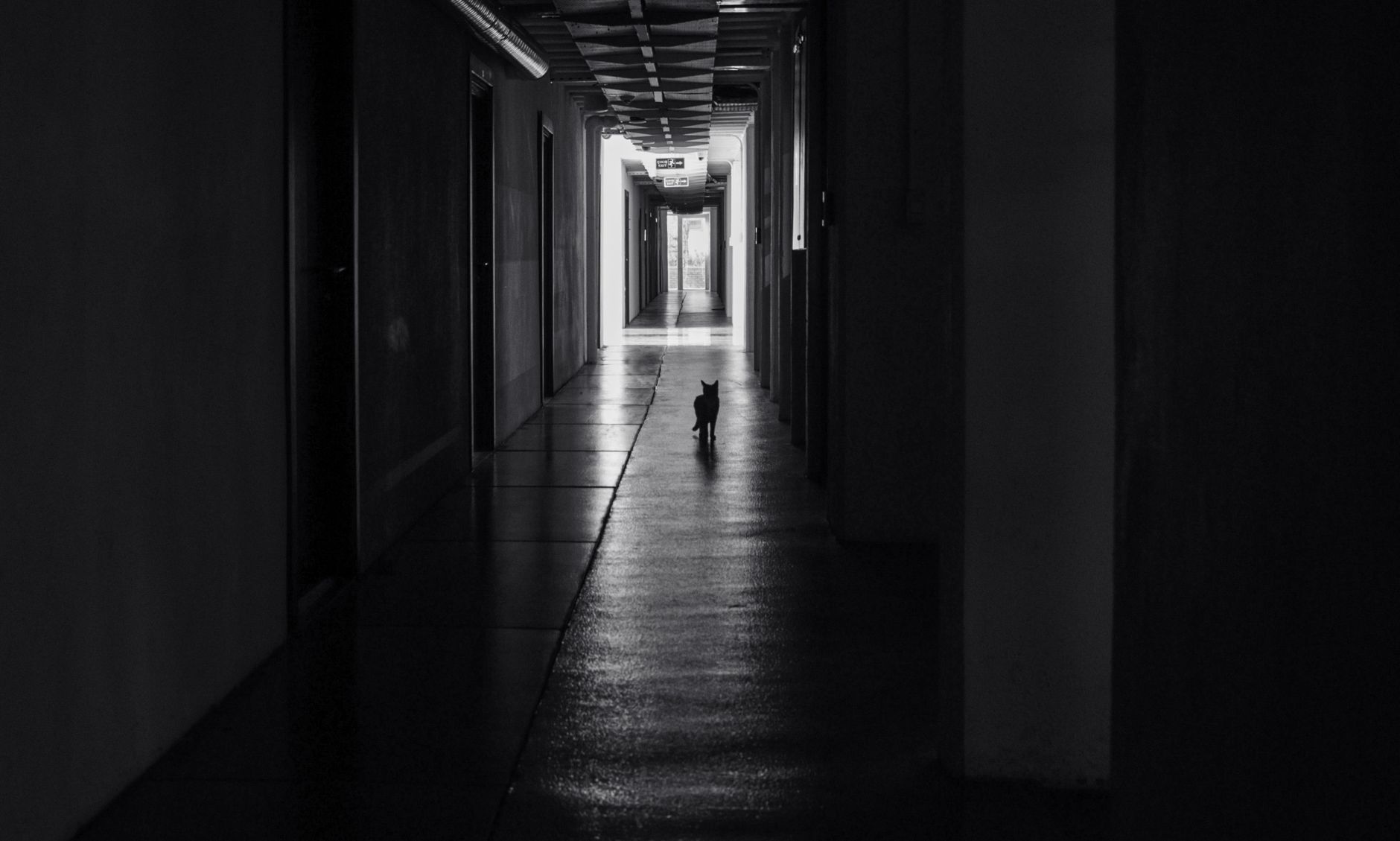
Cat People (1942) is the film that built a monster out of nothing and scared audiences more thoroughly than any creature RKO's special-effects department could have manufactured. Produced by Val Lewton for a reported budget of around $134,000, it invented a style of horror filmmaking that directors have been borrowing from ever since: withhold the image, trust the imagination, let the shadow do the work. Eighty-four years on, the film still holds.
What the film is about
Irena Dubrovna (Simone Simon) is a Serbian fashion illustrator living in New York who believes she carries an ancient curse. If she gives herself emotionally or physically to a man, the curse will transform her into a panther. She marries Oliver Reed (Kent Smith), a cheerful, literal-minded American who assumes his wife simply needs therapy. The film is the story of what happens when he turns out to be wrong.
Director Jacques Tourneur keeps the premise grounded in everyday life: offices, staircases, a pet shop, a municipal swimming pool. The horror intrudes on the mundane rather than replacing it. That's the whole method.
The Lewton technique: suggestion over spectacle
Val Lewton ran the horror unit at RKO after the studio handed him a title, a modest budget, and instructions to turn a profit. Cat People was his first production and it established the house style immediately. Lewton believed that audiences would frighten themselves more effectively than any prop artist could frighten them. Give viewers a dark corridor and the sound of heels on pavement, let that sound change slightly, and the mind fills the darkness with whatever it fears most.
The most celebrated sequence in the film is the pool scene. Oliver's colleague Alice (Jane Randolph) swims alone in an indoor pool while something paces the tiles above her. Tourneur cuts between Alice in the lit water and the surrounding darkness. No creature appears. The lights flicker. A hissing sound rises. By the time Alice scrambles out of the pool, every person in the audience has seen something, even though nothing was shown. That sequence directly influenced films like The Haunting (1963), which Robert Wise built on a similarly rigorous commitment to invisible dread.
The second great set piece is simpler still. Alice walks home at night along a park path while footsteps follow her. The footsteps stop. Then a bus arrives with a hiss of pneumatic brakes that functions as a jump scare while showing nothing dangerous at all. This is the "Lewton Bus," a term that entered the filmmaker's vocabulary and describes a technique horror movies still deploy today.
Simone Simon and what the film is really about
Simone Simon's performance is the film's quiet center. She plays Irena not as a villain but as a woman in genuine anguish, trapped between desire and a fear she can't prove is irrational. Her English is lightly accented, her face expressive without being theatrical. She radiates loneliness rather than menace. The result is a horror film that earns sympathy for its monster before it's ever clear that a monster exists.
The film is also, quite deliberately, about repression and sexuality. Irena can't consummate her marriage. She's in therapy. Her husband eventually turns to Alice for emotional support, which the film treats as betrayal wearing the mask of reasonableness. Cat People reads as a story about a woman whose desires are treated as pathological by every man around her, including the psychiatrist Dr. Judd (Tom Conway), who is condescending right up until the moment his condescension kills him. That reading has made the film increasingly interesting to critics over the decades, and it adds weight to what is already a formally precise genre exercise.
Tourneur's direction and DeWitt Bodeen's script
Jacques Tourneur was a precise and economical filmmaker. Every composition in Cat People places characters in deliberate relationship to light and shadow. Irena is almost always partially obscured: by darkness, by distance, by her own turned face. Oliver and Alice live in brightly lit offices and restaurants. The visual grammar of the film argues its thesis before a line of dialogue is spoken.
DeWitt Bodeen's script earns its 73-minute runtime without padding. It's a tight, intelligent piece of work that leaves the central question genuinely open: is Irena cursed, or disturbed, or simply a woman whose husband failed to understand her? The film doesn't resolve this cleanly, which is why it continues to reward repeat viewing. This same quality of psychological ambiguity distinguishes it from most horror films of the period. I Walked with a Zombie (1943), Tourneur's second collaboration with Lewton the following year, deepens exactly that approach, replacing easy supernatural explanation with layered, unresolved dread.
Context: 1942 and RKO's unlikely horror unit
Universal had dominated horror in the 1930s with Frankenstein, Dracula, and The Mummy, all of which leaned into visible monsters and operatic staging. By 1942, that cycle had exhausted itself into parody. Lewton's unit offered something different: cerebral, literary horror aimed at adults. Cat People was a hit, earning roughly $4 million against its modest budget and proving that audiences would accept suggestion as a valid cinematic currency.
The film launched a run of Lewton productions that included The Seventh Victim (1943), The Ghost Ship (1943), and The Body Snatcher (1945). None of them cost much. All of them mattered. Cat People is the founding document of that cycle, and its influence runs forward through decades of horror: the shadowed threats in Rosemary's Baby (1968), the patient off-screen menace in the best of modern elevated horror, the understanding that fear lives in what the audience projects rather than what the screen provides.
Verdict
Cat People (1942) is a small film that solved a large problem. It proved that horror could work entirely through implication, and it built a visual and psychological language that remains in use today. Simone Simon's performance anchors what could have been a simple B-picture and turns it into something genuinely sad. The pool scene remains one of the great set pieces in the genre. Tourneur's direction is controlled and confident throughout. It's 73 minutes. Watch it in the dark.
Rating: 9/10