George A. Romero's Dawn of the Dead (1978) is the rare sequel that doesn't just match its predecessor; it tears the whole argument open. Where Night of the Living Dead used a Pennsylvania farmhouse to trap us with people falling apart under pressure, Dawn of the Dead drops four survivors inside a Pittsburgh shopping mall and asks a nastier question: what exactly are we trying to survive for? It remains one of the most formally confident, politically vicious, and viscerally rewarding horror films ever made.
Plot and setting
The setup is deliberately simple. A television station collapses into chaos as the zombie crisis overwhelms Philadelphia. Two SWAT officers, Roger (Scott Reiniger) and Peter (Ken Foree), escape by helicopter with news producer Francine (Gaylen Ross) and her boyfriend Stephen (David Emge). They land on the roof of the Monroeville Mall in Pennsylvania, sweep the place of the undead, and lock it down. Then they stay. They stock up on food, fill the corridors with sporting goods and fur coats, and try to pretend they've won.
That's the whole film, really. Four people building a comfortable cage.
The satire with teeth
Romero planted the satire right in the location. Shoppers wandering the mall by force of habit, slack-jawed and purposeless. Romero wasn't subtle about it. He didn't need to be. The zombies shuffle past shop windows the same way the living once did, drawn by Muzak and fluorescent light to a building full of things they no longer need. What makes the joke land so hard is that the survivors do exactly the same thing. Peter trying on new watches. Roger filling a shopping cart. Stephen flying a helicopter while wearing a Hare Krishna robe they found in a boutique. The film earns the right to be funny because it never lets the comedy soften the horror underneath it.
The mall setting gives Romero room he didn't have in the farmhouse. Dawn of the Dead runs 139 minutes in its original theatrical cut and uses almost every one of them. The Monroeville Mall (a real location outside Pittsburgh) becomes a convincing world with geography the audience learns to read. When the space becomes threatened in the third act, you feel the loss of it even while knowing it was always a trap.
Tom Savini and the practical effects
Tom Savini handled the special effects, and his work here is the reason the film became a landmark. Savini was a Vietnam veteran who applied what he'd witnessed to the makeup chair, and it shows. Heads explode with a clinical exactness. Bites register as genuine anatomical events. The blood runs a vivid, almost artificial orange-red (partly a result of the Technicolor stock, partly a deliberate choice), which gives the gore a comic-book quality that keeps it just inside the frame of what the stomach can accept. It's operatic carnage, not sadistic lingering. There's a difference, and Savini understood it instinctively.
The biker gang sequence in the third act deploys his work at its most spectacular. It's also where the film's internal logic cracks open the hardest: the living prove more immediately dangerous than the dead.
The performances
Romero regular Ken Foree carries the film. Peter is composed, tactically smart, and given the movie's most quoted line: "When there's no more room in hell, the dead will walk the earth." Foree delivers it like scripture and makes you believe it. Scott Reiniger's Roger is Peter's opposite number, reckless and warm, and his decline in the film's middle section provides its most genuinely heartbreaking passage. Gaylen Ross plays Francine with a quiet resourcefulness that becomes essential once the script stops treating her as the group's conscience and starts letting her act. David Emge has the hardest job. Stephen is vain, indecisive, and frequently wrong, and the film asks you to grieve for him anyway.
Goblin's score and the tonal range
Italian prog-rock band Goblin composed the score (Romero had admired their work on Dario Argento's Suspiria the previous year, and Argento co-produced Dawn and assembled a different edit for Europe). The music shifts registers constantly: propulsive synth rock for the action sequences, a waltz-like melody for the mall montages that makes the material feel both dreamy and grotesque. Few horror films use their scores as intelligently.
The tonal range is part of what makes Dawn of the Dead difficult to categorise. It's funnier than most comedies released in 1978 and more frightening than almost all of the horror. Romero treats both impulses as equally valid, which is the hardest trick in the genre to pull off. Compare that to the same year's Halloween, which commits entirely to dread. Both approaches work. They're just doing different things with the same twelve months of cultural anxiety.
Legacy and why it still lands
The film spawned a direct sequel (Day of the Dead, 1985) and a well-regarded 2004 Zack Snyder remake, but neither touched the source material's depth. The original Dawn of the Dead is the film that established the template every zombie narrative since has had to argue with: the undead as background noise, the survivors as the real subject, and the audience implicated in every comfortable choice the characters make.
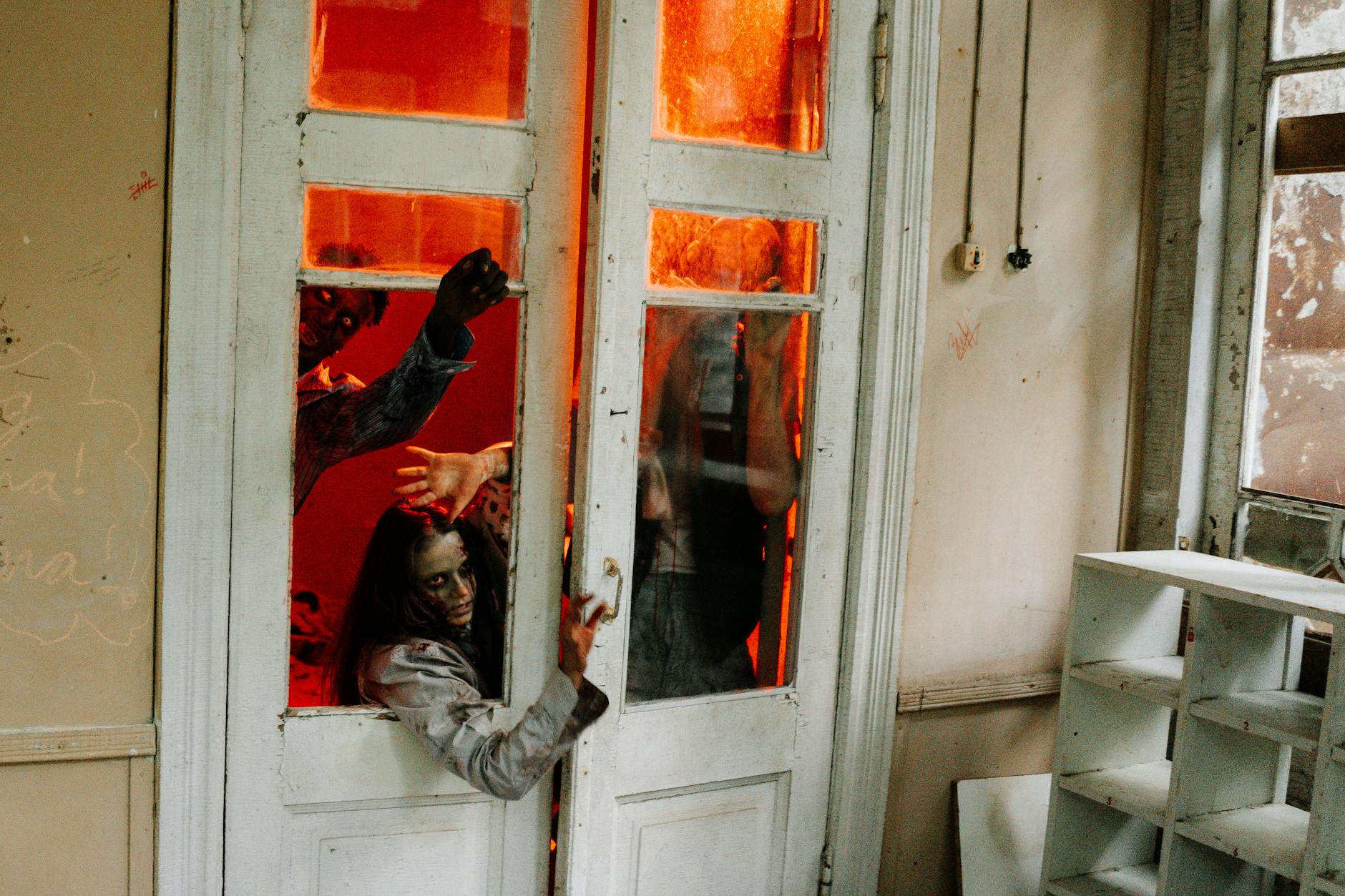
Romero shot Dawn of the Dead for roughly $1.5 million and returned somewhere around $55 million at the box office worldwide. The numbers tell part of the story. The rest of it is in a shopping mall in Pennsylvania, still half-lit and drifting, where the zombies press their faces against the glass and the survivors sit inside pretending they've figured something out.
It's a film that gets the last laugh, and it knows it.
Verdict: 10/10. George A. Romero's Dawn of the Dead is one of the great American films, full stop. Horror is just the most honest way to describe what it's doing.