Scream (1996) is the horror film that asked its audience to be smarter than the characters on screen, and then killed those characters anyway. Wes Craven's slasher revival, written by Kevin Williamson, arrived at a moment when the genre felt genuinely exhausted. What it produced was not a parody or a spoof. It was a razor-sharp horror film that simply chose to acknowledge the blade it was holding.
The opening that changed everything
Few scenes in horror history have landed as hard as the first twelve minutes of Scream. Drew Barrymore, cast as what every trailer promised was the lead, picks up a ringing phone in an empty house. The caller is charming, then threatening, then specific about what he wants to do to her. She's tied to a patio chair and gutted before the title card appears. It's a direct provocation aimed at anyone who thought they knew how these films worked. Craven learned that trick from Alfred Hitchcock's playbook in Psycho, and he executes it with the same ruthless confidence.
The scene works because Barrymore commits completely. She's terrified, not witty. The self-aware humour that defines the rest of the film is nowhere in those twelve minutes. Craven saves the commentary for later and opens on pure dread.
What "self-aware" actually means here
Critics and audiences reached for the word "meta" almost immediately, and it stuck. But self-awareness in Scream isn't a shield. The characters who quote the rules of horror films die anyway. Randy Meeks (Jamie Kennedy) lectures a party about what gets you killed in a slasher, while a killer is already loose in the building. Knowing the conventions doesn't protect you. It just makes you slightly more anxious on the way to the same destination.
This is the film's cleverest move. It lets the audience feel smart for catching the references, then punishes the characters who catch them too. Horror fans watching in 1996 got the pleasure of recognition without the comfort of safety. The genre rules become a kind of false map, detailed and confident, pointing in exactly the wrong direction.
Neve Campbell and the final girl reinvented
Sidney Prescott (Neve Campbell) is a genuinely well-constructed protagonist. She's grieving her murdered mother, navigating a relationship with a boyfriend she doesn't quite trust, and surrounded by a town that is making her tragedy into tabloid content. Cotton Weary's wrongful conviction hangs over everything. Sidney carries real psychological weight before Ghostface calls her once.
Campbell plays her as frightened but not passive. When Sidney fights back, it doesn't feel like a twist. It feels earned. The script gives her a specific reason to be angry and capable: she watched her mother be reduced to a headline, and she refuses to be next. That's a more grounded motivation than most slashers bother with.
Her arc connects to a broader shift in horror at the time. Compare Sidney's interiority to the heroines of the films Scream is explicitly referencing, and the gap is real. It's no coincidence that the original final girl template in Halloween (1978) gets name-checked in the film's dialogue while the script quietly does something different with the concept.
Ghostface: a surprisingly effective monster
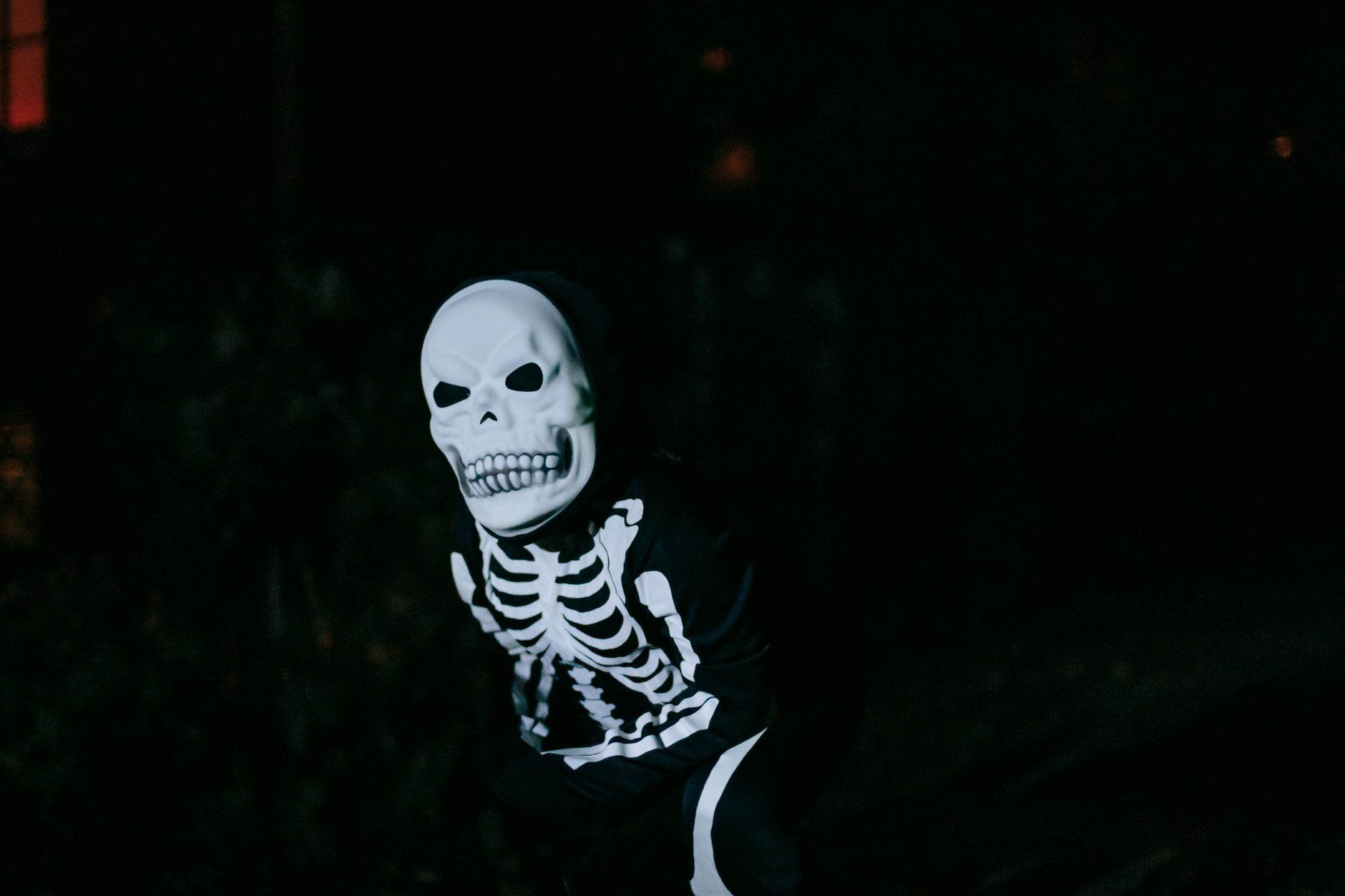
The costume is deceptively simple. A white mask adapted from Edvard Munch's "The Scream," a black robe, and a voice modulator. The mask has become so culturally ubiquitous that it's easy to forget how genuinely unsettling it is in context. It's expressionless in a way that reads as emptiness rather than blankness. There's no face behind it to empathise with or fear on a specific basis. It's just a void in a hood.
Craven also makes Ghostface clumsy, and that's a real choice. The killer trips, gets thrown off, stumbles after victims. It makes the violence feel less ceremonial and more chaotic. Less supernatural, which is exactly the point. Scream roots its horror in the mundane. The killer isn't a shape or a dream demon. The killer is someone who went to school with Sidney.
The screenplay as horror criticism
Kevin Williamson's script was written in three days (reportedly while he was alone in a house watching horror films and scaring himself). That speed shows in the best possible way. The dialogue is fast and specific. Characters don't speak in themes; they speak in movie titles and video store arguments.
Williamson genuinely understood slasher mechanics from a fan's perspective. The rules Randy outlines, no sex, no drinking, never say "I'll be right back," are real patterns from the genre. The film then uses them structurally. Characters who violate the rules do die. The film follows its own logic while simultaneously pointing at that logic. It's a tighter loop than it looks.
The whodunit plotting holds up. Rewatching, the clues are genuinely present. Stu Macher (Matthew Lillard) and Billy Loomis (Skeet Ulrich) are not randomly selected at the end. The screenplay earned its reveal.
Craven's direction: tension without tricks
Wes Craven spent most of Scream doing something unusual for him: restraint. The film is shot cleanly and without the expressionistic excess of A Nightmare on Elm Street. Cinematographer Mark Irwin keeps things well-lit and suburban, which is far more unsettling than gothic shadow would have been. The horror lives in houses you recognize, under lighting you'd find in any kitchen.
The party sequence in the third act is genuinely well-staged chaos. Craven cuts between locations, manages a large cast, and keeps the spatial logic coherent even as bodies drop. It's functional filmmaking in service of pure escalation. No wasted shots.
The Silence of the Lambs (1991) had recently proven that horror could win Academy Awards and be taken seriously as American cinema. Scream arrived five years later and made no attempt at prestige. It wanted to be a great horror film, on horror's own terms. It succeeded.
What it did to the genre
Scream grossed $173 million worldwide on a $15 million budget and triggered a wave of self-referential teen horror that lasted until the early 2000s. I Know What You Did Last Summer, Urban Legend, Final Destination: each owed something to Williamson and Craven's template. Most of them got the tone wrong. They kept the quippiness and lost the fear.
The sequels Craven made varied in quality, but the original stands clean. Nearly thirty years after its release, Scream (1996) still functions as a horror film first. The meta-commentary is not a wall between the audience and the scares. It's a corridor that leads directly into them.
Ghostface gets you whether you know the rules or not. That's the joke, and it lands every time.