The House of the Devil (2009) is Ti West's love letter to early-1980s horror, and it works not by imitating that era but by genuinely inhabiting it. Shot on 16mm, graded to look like something pulled from a VHS shelf, and paced with a slowness that most contemporary directors would flinch at, the film follows Samantha (Jocelin Donahue), a cash-strapped college student who takes a last-minute babysitting job at a remote Victorian house on the night of a lunar eclipse. There is no baby. The house belongs to the Ulman family (Tom Noonan and Mary Woronov, both impeccably unsettling). And the night is going to end badly. That's everything the premise needs.
What Ti West actually does with ninety minutes
West spends the first hour of The House of the Devil doing almost nothing in the conventional horror sense. Samantha wanders the house. She orders a pizza. She dances to her Walkman in one of the film's most celebrated sequences, spinning through empty rooms while "One Thing Leads to Another" by The Fixx plays out in full. West holds shots longer than they need to run. He lets the camera linger on a closed door. Nothing happens, and because nothing happens, everything feels like it's about to.
This is deliberate craft, not indulgence. West understands something that many modern horror directors have forgotten: dread is a product of time, not events. The House of the Devil works on the same principle as When a Stranger Calls (1979), a film built almost entirely on the terror of waiting in a strange house with a phone that might ring. Both films treat the babysitter as an exposed nerve. The situation is the monster. The house is the trap. The slow accumulation of minutes spent alone is the method of torture.
Performance and atmosphere
Donahue carries the film almost entirely alone, and she's exceptional. Samantha isn't written as a particularly complex character, but Donahue brings a naturalism to the role that makes the waiting feel real. She's bored, mildly creeped out, occasionally nervous, and doing her best to suppress all of it. That suppression is where the film lives. When she finally does react to something genuinely wrong, the contrast lands hard.
Noonan deserves special mention. He plays Mr. Ulman as a man who seems entirely reasonable right up until the moment he clearly isn't. His voice is soft and his manner is courteous, which makes the off-note details accumulate without ever cresting into open menace. The moment when he reveals that there is, in fact, no baby to sit is handled with such calm that Samantha talks herself into staying anyway. West and Noonan both understand that the most effective manipulation doesn't look like manipulation at all.
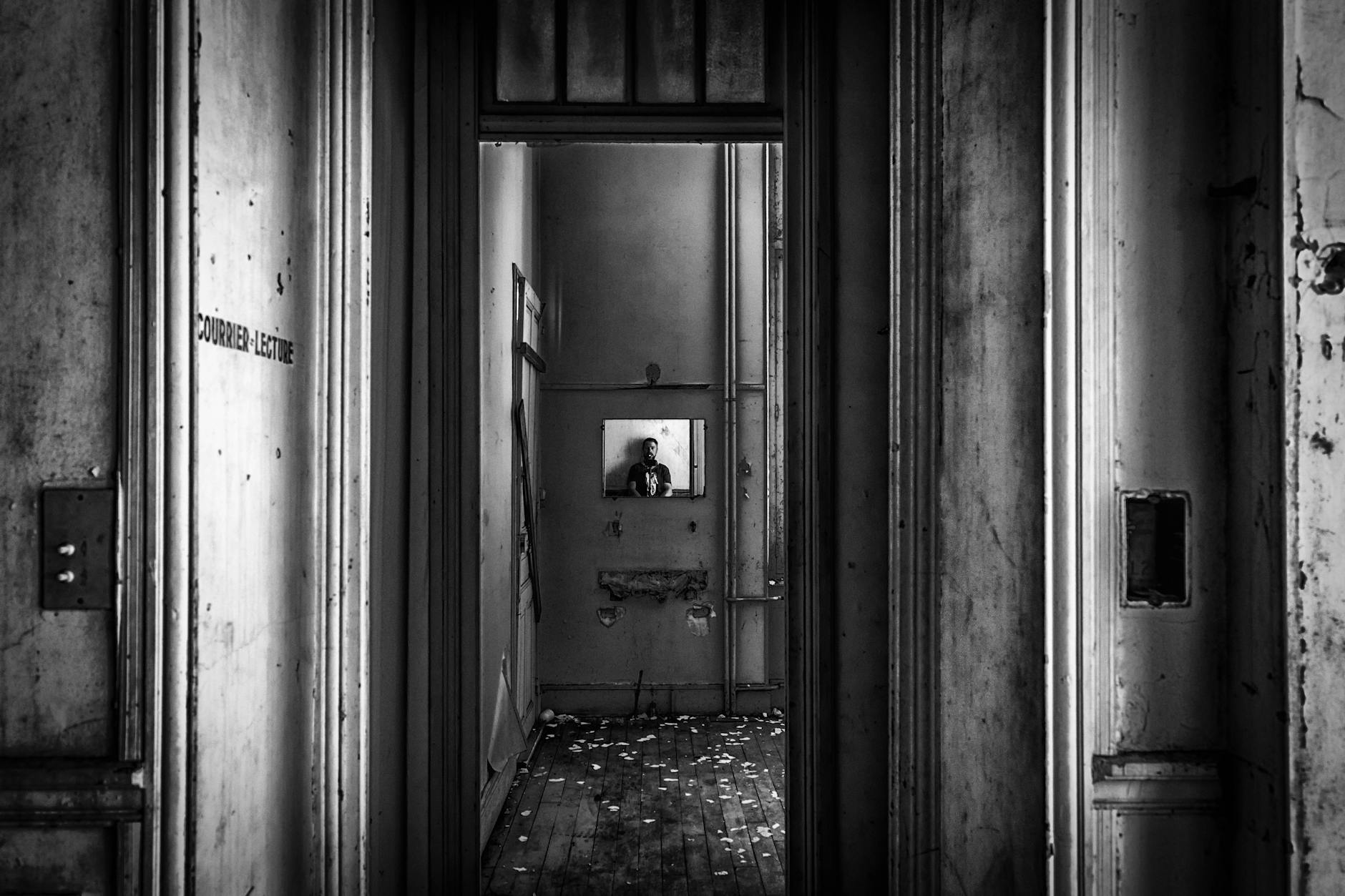
The house itself is a character. Cinematographer Eliot Rockett shoots the Victorian interiors with a real attention to negative space: dark hallways that pull the eye, upper floors that Samantha is told to avoid, a single window that looks out onto a treeline where something might have moved. The production design commits to the period so thoroughly that the film genuinely feels like it was made in 1983. That's not a cosmetic effect. It changes how the film reads. Horror grammar shifted significantly between 1983 and now, and West uses the older grammar deliberately to create a pace and a register that modern audiences have become unaccustomed to.
The third act and what it costs
The House of the Devil's final act arrives with sudden, almost jarring violence after such sustained quiet. This is where the film divides audiences. Some find the pivot into Satanic ritual and gore satisfying. Others feel it's less interesting than the slow-burn hour that precedes it. Both responses are defensible.
West doesn't resolve the film neatly. The ending is bleak and deliberately incomplete, the kind of closing image that prioritises atmosphere over explanation. It's the correct choice. A film that has carefully avoided spelling things out for ninety minutes shouldn't suddenly explain itself in the final two. The ambiguity is earned. It also ensures the film sits uneasily in the memory, which is exactly where it belongs.
Comparisons to Halloween (1978) are inevitable and West invites them. Both films treat anticipation as a formal device, both position a young woman alone as the locus of the audience's anxiety, and both demonstrate that a slender premise, executed with discipline, produces something more frightening than a complicated plot. Where Carpenter's film has Michael Myers as an ever-present shape at the edge of the frame, West withholds even that much. The House of the Devil gives you nothing to fix your fear onto. That's the point.
Why it holds up
The House of the Devil arrived in 2009, the same year Ti West was also quietly building a reputation as one of American horror's more thoughtful formalists. His subsequent work, including Pearl (2022), confirmed that patience and formal control are his genuine strengths, not affectations. But The House of the Devil remains the purest expression of what he can do when he commits entirely to atmosphere and refuses all shortcuts.
It's a film that asks a lot of its audience. It offers no jump scares in the conventional sense, no fast editing, no musical stings that tell you when to be frightened. It sits with you in that house and it waits. If you're willing to wait with it, The House of the Devil delivers the kind of dread that doesn't dissipate when the credits roll. It follows you out.