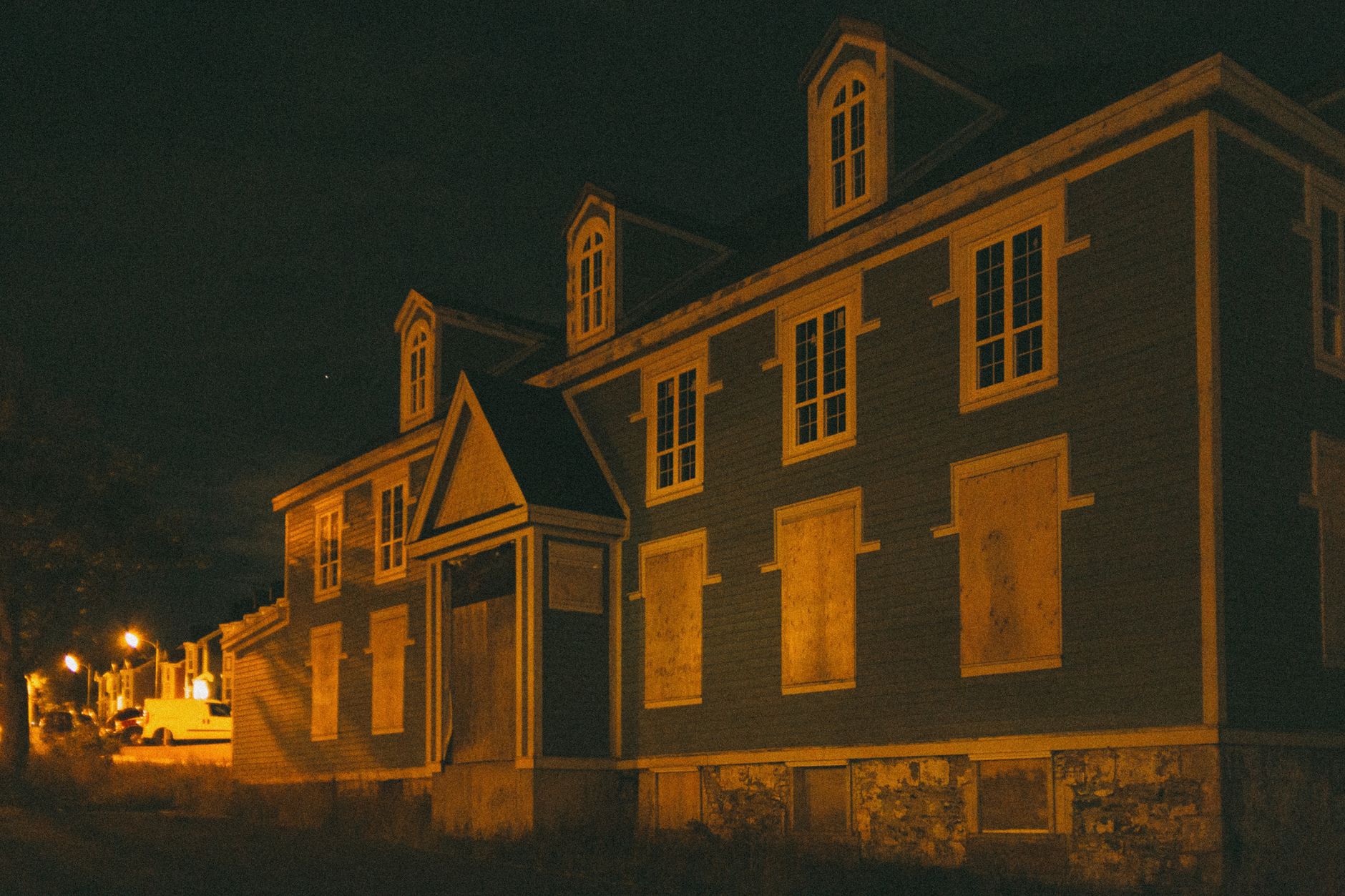
The House of the Seven Gables by Nathaniel Hawthorne is one of American literature's most enduring haunted house novels, published in 1851 and still generating the kind of unease that most modern horror fiction chases without catching. It isn't a ghost story in the conventional sense. Nobody materialises in a corridor. No doors open by themselves. What Hawthorne constructs instead is something slower and more poisonous: a house that embodies the sins of its founding, and a family that can't leave because the house is, in a sense, what they are.
What the novel is actually about
The Pyncheon family has occupied their gabled mansion in Salem, Massachusetts for roughly two centuries. The house was built on land stolen from a man named Matthew Maule, who was executed for witchcraft after the elder Colonel Pyncheon accused him. Maule's curse, delivered from the scaffold, promised that the Pyncheons would drink blood. The novel opens with the family's fortune long curdled. The house stands. The family diminishes inside it.
Hepzibah Pyncheon, elderly and arthritic, reopens a small shop in the ground floor to survive. Her brother Clifford returns from prison, broken after a wrongful conviction engineered by their cousin Judge Jaffrey Pyncheon, a man whose public respectability conceals a capacity for real violence. A young daguerreotypist named Holgrave lodges in the house. And Phoebe arrives: a young country cousin, practical and warm, who functions as the novel's only genuinely healthy person and who Hawthorne uses to show us just how sick everything else is by contrast.
That contrast is the novel's sharpest tool. Phoebe works. She brightens. And yet the house absorbs her too, slowly, inevitably.
Hawthorne's gothic architecture
Hawthorne knew what he was doing with houses. He'd grown up in Salem, conscious of his own ancestor John Hathorne's role in the 1692 witch trials (he added the 'w' to his surname partly to create distance). That biographical guilt threads through every rafter of The House of the Seven Gables. The novel isn't just a story set in a haunted house. It is an argument that America itself is a haunted house, built on theft and judicial murder, and that comfort and prosperity don't erase those foundations. They grow from them.
The house's physical decay mirrors the family's moral condition. Hawthorne describes it with almost architectural precision: the wood darkened by time, the garden choked and half-wild, the interior smelling of rot. It works as atmosphere and as metaphor simultaneously, which is the mark of the best Gothic fiction. Compare this to how The Little Stranger by Sarah Waters uses Hundreds Hall: a structure whose deterioration is inseparable from the people it has shaped, and whose history cannot be surgically removed from its present.
Judge Pyncheon: the real monster
The novel's most powerful horror is human. Judge Jaffrey Pyncheon is one of the great villains in nineteenth-century American fiction, not because he's operatically evil but because he's so believable. He is charitable in public, respected on the street, likely a candidate for governor. His violence is quiet, legal, institutional. He destroyed Clifford with a lie and feels nothing about it that couldn't be smoothed over by a good dinner and a newspaper profile.
There's a chapter called "Governor Pyncheon" in which Hawthorne addresses the dead Judge directly, cataloguing every appointment he'll now miss, every civic duty left undone. It's one of the strangest and most effective pieces of prose in the novel: satirical, gloating, and genuinely eerie all at once. The Judge sitting dead in his chair while the clock ticks and the house waits is more disturbing than most explicitly supernatural horror sequences from the period.
Where the novel succeeds and where it strains
Hawthorne's prose is dense by modern standards. Long sentences, layered subordinate clauses, a tendency to pause the narrative for extended moral reflection. Some readers will find the pace punishing, especially in the middle sections where Clifford and Hepzibah drift through their days in a kind of paralysed melancholy. That paralysis is the point, but it can test patience.
Phoebe's eventual romance with Holgrave also feels hurried and convenient, given what we learn about Holgrave's identity near the novel's end. Hawthorne wants a hopeful conclusion. The machinery of the plot makes that hope feel slightly imposed rather than earned. He's better at dread than resolution. That said, the final pages have their own strange power: the family finally leaving the house, the house left behind, the curse theoretically broken. It reads less like triumph than like escape. You don't entirely believe the damage is undone.
The novel sits in conversation with a broader tradition of houses that won't let their inhabitants go. The House on the Borderland by William Hope Hodgson takes the concept of a dwelling as a portal to cosmic horror to its logical extreme, but Hawthorne got there first with something more psychologically acute: the idea that a house can be a trap not because of supernatural forces but because of what its owners owe it, what it represents, what leaving would mean.
Its place in American horror
Hawthorne's influence on American horror fiction is direct and measurable. Edgar Allan Poe and Hawthorne were contemporaries who shared a fascination with guilt's physical manifestations, but Hawthorne took the longer view. Where Poe's narrators crack fast and spectacular, Hawthorne's characters crack slowly, across generations, through inheritance and repetition. That generational model of horror runs through Shirley Jackson, through the Southern Gothic tradition, through contemporary writers like Tananarive Due. The idea that what your ancestors did comes back not as a ghost but as a structural condition: that's Hawthorne's real contribution.
The House of the Seven Gables is not an easy read and it doesn't try to be. But it rewards patience in the way that great Gothic fiction does: by the time you finish it, the house is in your head, and the question it raises (can you ever really leave the house your family built on someone else's grave?) doesn't go anywhere clean.
The answer Hawthorne offers is cautious and not entirely convincing. The house stands after the Pyncheons have gone. That detail says more than the happy ending does.