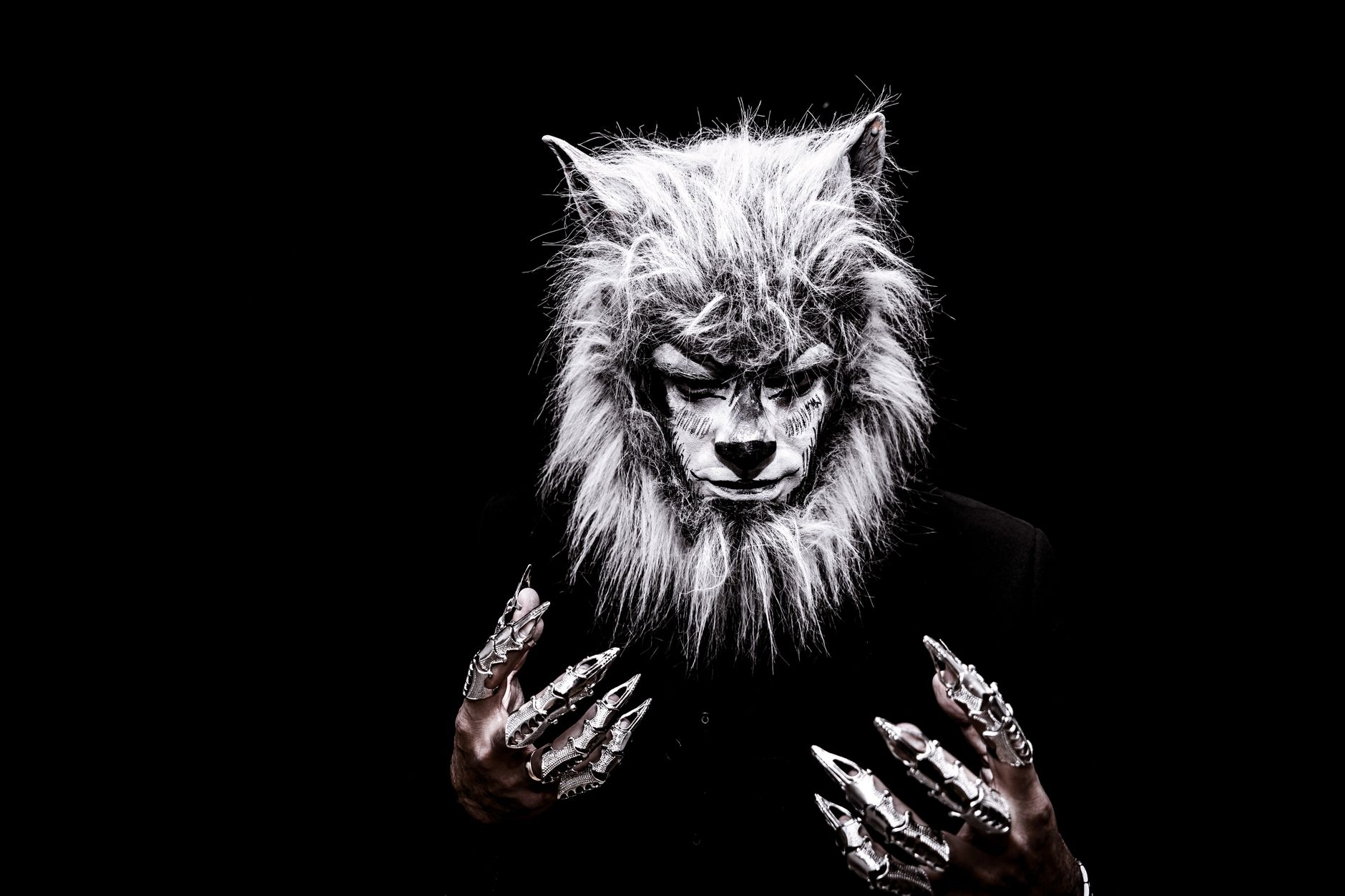
The Howling (1981) arrived at a remarkable moment. Within a single calendar year, werewolf cinema produced three films that would permanently reshape the genre: this one, An American Werewolf in London, and the forgettable but historically notable Wolfen. Joe Dante's film is the most complex of the three. It's smart enough to comment on itself, weird enough to keep you off-balance, and confident enough to let Rob Bottin's practical effects do the arguing when words run out. Four and a half decades later, it holds up better than its reputation sometimes suggests.
What the film is actually about
Karen White (Dee Wallace) is a television news anchor who agrees to act as bait in a sting operation targeting a serial killer named Eddie Quist. The encounter in a peep-show booth traumatises her so severely that she can't remember what happened. Her therapist, Dr. George Waggner (Patrick Macnee, playing it beautifully straight), sends her and her husband Bill (Christopher Stone) to a rural retreat called The Colony to recover. The Colony is full of eccentric residents who go out at night and make alarming noises. Karen's colleagues back in the city, Terri and Chris, dig into Eddie Quist's background and find something deeply wrong. The two storylines converge, as they must, in a finale that's both ludicrous and strangely moving.
The screenplay, by John Sayles and Terence H. Winkless adapting Gary Brandner's novel, is considerably more layered than the premise implies. Dante and Sayles use the werewolf as a vehicle for examining group psychology, media complicity, and the therapeutic industry's capacity for harm. The Colony isn't just a monster enclave. It functions as a cult, with Waggner as its charismatic leader preaching integration and self-acceptance to creatures who want to hunt. The horror emerges from exactly what you'd expect from a cult: the cost of membership, the difficulty of leaving, and the violence done to outsiders who stumble in.
Dante's direction and the film's tone
Joe Dante directs with a loose, pleasurable energy that some viewers mistake for sloppiness. It isn't. Dante is one of cinema's great genre ironists. Gremlins, Innerspace, The 'burbs: his films consistently smuggle genuine unease into packages that look like crowd-pleasers. The Howling works the same way. Dante loads the frame with references to earlier werewolf cinema, from posters in the background to a television screening of The Wolf Man during a key scene. Claude Rains and Lon Chaney Jr. appear in clip form. The bookstore that Terri visits is lined entirely with occult texts and monster paperbacks. These aren't random Easter eggs. They're the film declaring its own awareness of what it's doing, and inviting the audience into that awareness.
This self-referentiality sits alongside some genuinely unsettling sequences. The Colony at night is a threatening place. Characters who seemed harmless in daylight move differently after dark. Dante uses sound design to extraordinary effect: the howling of the title is less a monster's roar than a collective voice, a chorus of things that have given themselves over to something. It's the sound of community as threat.
Rob Bottin's transformation effects
No review of The Howling (1981) gets very far without stopping at the effects. Rob Bottin was 22 years old when he designed the werewolf transformations here. The centrepiece sequence, involving Eddie Quist's full transformation in a dimly lit room while a terrified Karen watches, remains one of the most tactile pieces of practical effects work in horror history. Bottin's creatures don't just grow fur and fangs. They swell, stretch, reshape at the cellular level. The camera stays on the process rather than cutting away, which is the correct choice. The result is something that feels biological rather than theatrical: wrong in the way a body should never be wrong.
Rick Baker, who had worked on the film before departing to do An American Werewolf in London, took a different approach with that film's transformation. Both are extraordinary. Baker's is more elegant. Bottin's is more visceral and disturbing. Neither is the wrong answer. The 1981 werewolf cycle is genuinely worth exploring for this reason alone: two master effects artists, two competing philosophies, both executed at the peak of the form.
Dee Wallace and the film's emotional core
Dee Wallace carries the film on the back of a performance that never lets the absurdity swamp the character. Karen White is a professional woman navigating trauma, a failing marriage, and the gradual discovery that her therapist is hosting a lycanthrope collective in the California hills. Wallace plays all of it with commitment and without condescension to the material. Her final scene, which requires her to do something genuinely brave and genuinely terrible in front of a live television audience, lands because Wallace has built a real person over the previous 90 minutes. The ending is bleak. It earns its bleakness.
The supporting cast is stocked with horror veterans: John Carradine, Slim Pickens, Kevin McCarthy. Dante treats these casting choices as gifts to the informed viewer without alienating everyone else. Elisabeth Brooks as the predatory Marsha Quist is the film's most purely dangerous presence, an embodiment of The Colony's philosophy that contact with something wild permanently changes you.
Where it sits in Dante's filmography and the wider genre
The Howling sometimes gets underestimated because it arrived alongside films that have gathered more critical prestige over time. It doesn't have the emotional devastation of The Thing (1982), which John Carpenter released a year later with similar practical-effects ambition. It doesn't have the streamlined dread of Halloween. What it has is something harder to categorise: a genuine argument, running underneath the creature-feature mechanics, about what it means to accept the worst parts of yourself and what that acceptance costs the people around you. Waggner's Colony isn't evil because its members are werewolves. It's evil because it has convinced those members that their hunger is a gift rather than a wound.
That's a sharper idea than most horror films attempt. Dante delivers it without ever becoming ponderous, which is its own kind of achievement. The film moves. It has humour that doesn't undercut the horror. It has a lead performance that grounds the strange in the specific. And it has effects work that a room full of modern CGI artists couldn't better with unlimited time and budget.
The Howling (1981) is currently available on Shudder and is worth revisiting if you last saw it decades ago or dismissed it in favour of the more celebrated werewolf films of its era. It rewards the attention.
Verdict
The Howling (1981) is a smarter, stranger film than its genre classification tends to suggest. Joe Dante's direction balances irony and genuine menace, Rob Bottin's practical effects remain extraordinary, and Dee Wallace gives the film a human centre it never loses. Four and a half decades on, it's one of the best werewolf films ever made.
- Director: Joe Dante
- Year: 1981
- Runtime: 91 minutes
- Screenplay: John Sayles and Terence H. Winkless, based on the novel by Gary Brandner
- Rating: 9/10