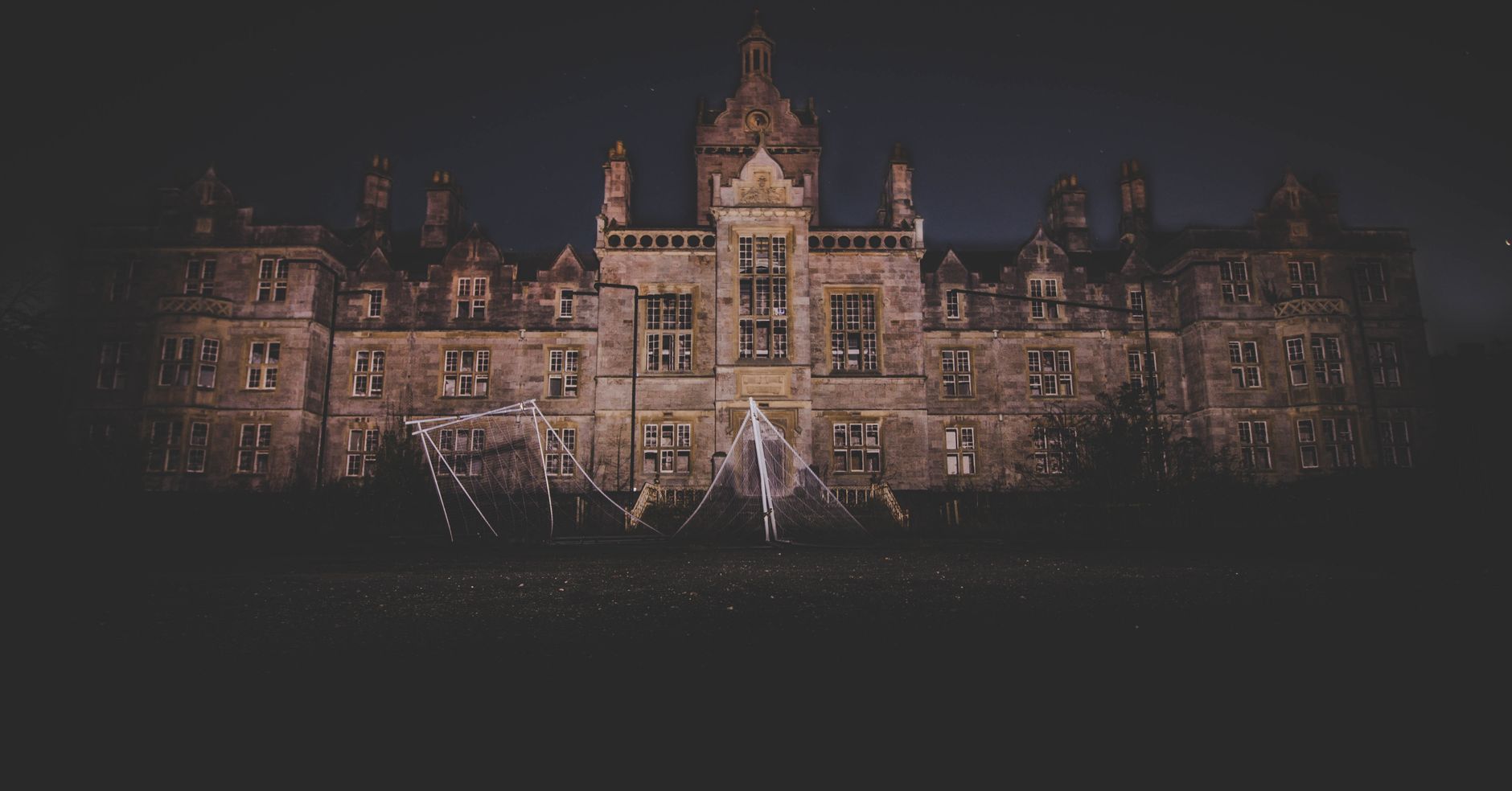
The Innocents (1961) is one of the most unsettling films ever made, and it doesn't show you much of anything. Directed by Jack Clayton from a screenplay by Truman Capote and John Mortimer, the film adapts Henry James's novella The Turn of the Screw with such precision that its central ambiguity remains genuinely unresolved more than 60 years on. Is Bly House haunted? Are the children corrupted? Or is Miss Giddens simply losing her mind? Clayton refuses to answer, and that refusal is the point.
The story and what it does to you
Deborah Kerr plays Miss Giddens, a governess hired by a wealthy, indifferent bachelor (Michael Redgrave) to look after his orphaned niece and nephew, Flora and Miles, at his sprawling country estate. She's told not to bother him under any circumstances. The children are charming, the house is beautiful. It doesn't stay that way.
Giddens begins to see figures: a man on a tower, a woman at a window, a face pressed to the glass. She learns these figures match descriptions of two dead servants, Quint and Miss Jessel, both of whom had an inappropriate relationship with each other and, it's implied, with the children themselves. From there, the film asks you to hold two possibilities in your head at once: the estate is genuinely haunted and the children are possessed, or Miss Giddens is a repressed, frightened woman projecting her own hysteria onto innocents who don't understand why she's terrifying them.
Neither answer is clean. Both are horrifying.
What Jack Clayton and Freddie Francis made
Clayton's direction is controlled to the point of severity, and cinematographer Freddie Francis shoots the whole film in a widescreen black-and-white that feels simultaneously lush and suffocating. Bly House is full of light, flowers, and open space during the day. Francis uses deep focus to place figures far back in the frame, half-visible, and you find yourself scanning the edges of every shot. That vigilance is exhausting in the best way.
The sound design deserves its own paragraph. Georges Auric composed the score, but it's the silences and the ambient sounds that do the real work: children's voices singing half-heard nursery rhymes, wind through tall grass, creaking floorboards that shouldn't be creaking. Horror Scope has reviewed The Others (2001), a film that clearly studied every frame of this one. Both understand that sound functions as evidence. What you hear when nothing is visibly wrong is what breaks you.
Deborah Kerr and the children
Kerr gives one of the finest performances in horror cinema. Full stop. Miss Giddens starts the film wide-eyed and earnest, a woman grateful for a position of responsibility. She ends it in a state that's hard to name. Kerr plays each stage of the character's unraveling without ever letting the audience get ahead of her. There's a scene where she watches Miles play the piano, and the expression on her face shifts from pride to something that reads almost like hunger. It's deeply uncomfortable. Kerr never telegraphs it.
Martin Stephens as Miles is one of the most effective child performances in any horror film. The character is either a corrupted vessel for a dead man's spirit or a clever, strange boy being accused of something he doesn't understand. Stephens plays it so that both readings are always active. There's a scene where he whispers something to Flora in the garden, and they both laugh, and it is genuinely creepy. No monster required.
Pamela Franklin as Flora is equally unsettling. She smiles at the wrong moments. She sings to herself at night. Her blankness feels deliberate, but is it the blankness of innocence or of something else? The film keeps asking the question and walking away without answering.
Ambiguity as a horror tool
The most frightening ghost stories work because they exploit the unreliable narrator, a device that puts the horror inside perception itself. The Innocents does this better than almost any film before or since. The apparitions Giddens sees are filmed in a way that doesn't tip the hand: they stand there, they look at her, they vanish. No jump scare. No dramatic music cue. Just a figure, and then nothing. You can argue the film confirms they're real, and you can argue it confirms they're not. Watch it twice and you'll construct two entirely different movies.
This connects directly to what makes Rosemary's Baby (1968) so durable as well. Roman Polanski built his film on the same fulcrum: a woman who might be paranoid or might be completely right. Both films use domesticity as the threat's container. The horror isn't out there in the dark. It's in the house you can't leave, delivered by people who seem to love you.
The ending and why it still lands
Without detailing every beat: the film ends badly for someone. Clayton films the final scene with a tenderness that makes it more disturbing, not less. There's no catharsis. There's no explanation. Just a consequence, and then a closed door, and then the opening shot of the film recycled as a kind of epitaph. It's a structural choice that suggests the whole thing is a memory Giddens can't stop replaying, which retroactively colours every frame you've just watched.
Few films commit this fully to refusing you the exit you want. That commitment is exactly why The Innocents holds up. It doesn't let you settle. You finish it still watching the edges of the frame, still not sure what you saw.
Verdict
The Innocents (1961) is essential horror cinema. It's the film that proved ambiguity, properly handled, is more frightening than any explicit monster. Kerr's performance, Francis's photography, and Clayton's iron control over tone make it a masterwork that hasn't been surpassed in the psychological ghost story genre. The Criterion Collection release restores it beautifully. Watch it in the dark, with the volume up, and leave the light off when you go to bed.
- Director: Jack Clayton
- Screenplay: Truman Capote, John Mortimer (based on Henry James's The Turn of the Screw)
- Cinematography: Freddie Francis
- Stars: Deborah Kerr, Martin Stephens, Pamela Franklin, Michael Redgrave
- Runtime: 100 minutes
- Rating: 5 out of 5