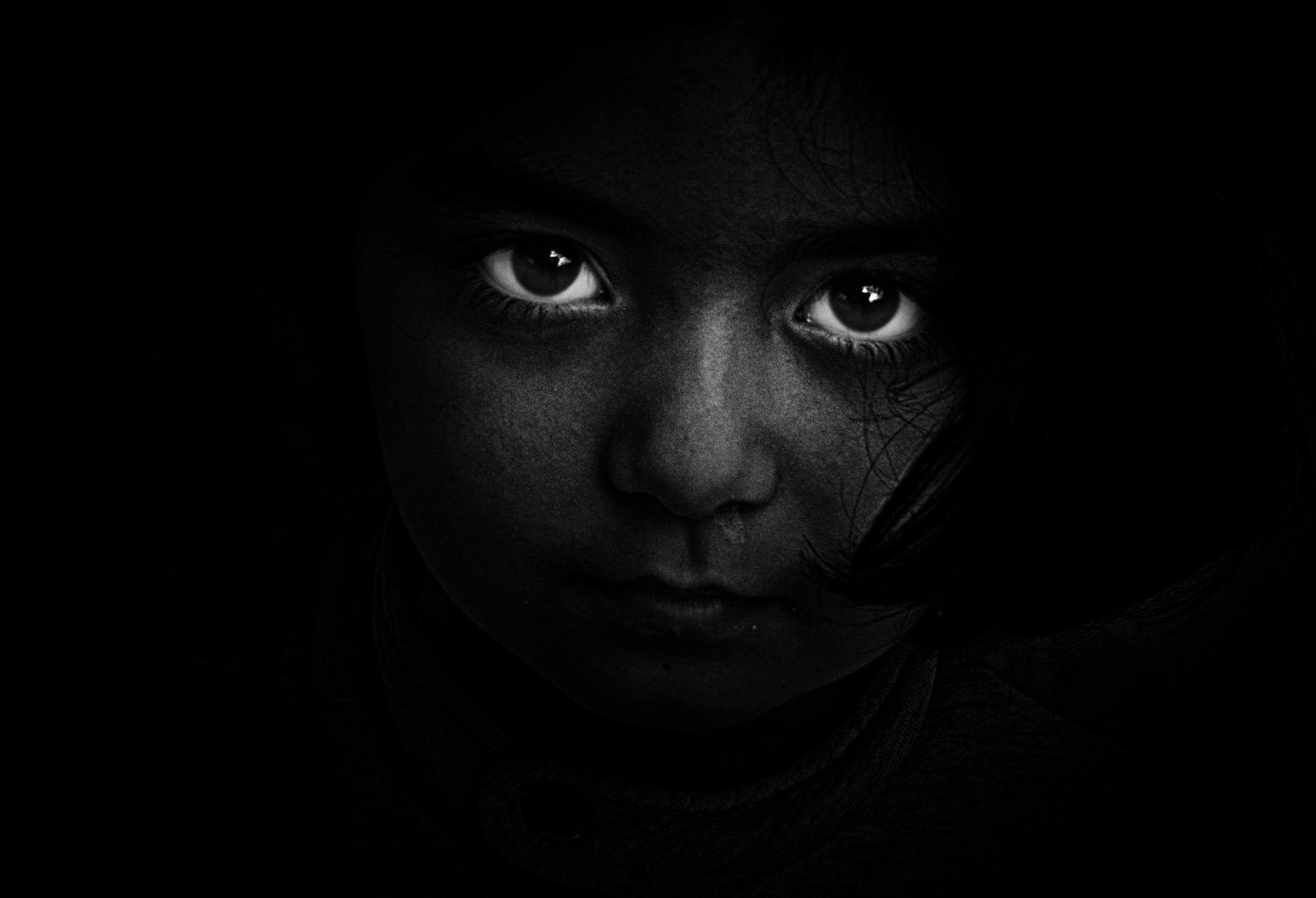
The Omen (1976) is one of those horror films that never needed to show you much. A small boy with dark eyes. A dog that doesn't behave like a dog. A nanny stepping off a rooftop at a birthday party with a smile on her face. Richard Donner's Antichrist thriller operates almost entirely on implication, and that is precisely what makes it so effective. Watching it now, the film feels less like a genre exercise and more like a perfectly constructed nightmare about parenthood and the thing you cannot bring yourself to believe about your own child.
What the film is about
American diplomat Robert Thorn (Gregory Peck) accepts a secret arrangement at the hospital where his wife Kathy (Lee Remick) has just given birth. Their son died. Another child, whose mother also died in labour, needs a family. Thorn takes the boy home and tells Kathy nothing. The boy's name becomes Damien. Five years pass. Then the nanny hangs herself at Damien's birthday party. Then a new nanny arrives (Billie Whitelaw, playing Mrs. Baylock with an almost affectionate menace that should win prizes). Then the deaths start accumulating, and a priest named Brennan (Patrick Troughton) tells Thorn that his son is the Antichrist and must be killed before a specific date.
What Donner understands, and what keeps The Omen working as a film rather than merely a concept, is that the horror lives inside Thorn's paralysis. Peck was 60 years old and brought the gravity of a man who has ordered his entire life around what is respectable and correct. Every scene where Thorn refuses to believe what he is being told plays as character truth, not stupidity. He simply cannot be the father of the son of Satan. The film's real subject is that refusal.
The set pieces that earned the film its reputation
The Omen built a reputation in 1976 partly on its deaths. They're elaborate, staged with real craft, and each one arrives after a stretch of quiet accumulation that makes the impact genuine. The decapitation by a runaway pane of glass is the one that lodged in cultural memory, and it still earns it. Donner holds on the aftermath rather than cutting away, which is the correct instinct. The scene where Damien's pram drives Kathy off a balcony is quieter, almost gentle, and worse for it.
But the film's most disturbing sequence isn't a death at all. It's a visit to the zoo. Damien and his parents drive through a safari park. The giraffes scatter. The baboons swarm the car. Kathy screams. Damien sits still and watches. Harvey Spencer Stephens, who played Damien, was five years old during filming. Donner cast him for the way he looked at the camera during auditions: not frightened, not curious, just looking. That look is the whole film.
Jerry Goldsmith's score deserves its own paragraph
The score Goldsmith composed won the Academy Award for Best Original Score, and it deserved to. "Ave Satani" is one of the most immediately recognisable pieces of horror music ever recorded, a full orchestral Latin choir that sounds like a coronation for something ancient and enormous. Goldsmith threads the theme through the film in fragments before unleashing it fully, which means when it arrives at full force the effect is cumulative rather than sudden. The score doesn't just accompany the film. It is the film's argument. It insists the events on screen are cosmically serious even when your rational mind is telling you they're not.
Compare this to the approach taken by Rosemary's Baby (1968), which builds its Satanic horror almost entirely without a conventional score, relying on ambient sound and Mia Farrow's performance. Both methods work. Goldsmith's choice turns The Omen into something operatic where Polanski chose the intimate.
Lee Remick and Billie Whitelaw
Gregory Peck gets top billing and carries the film's procedural spine, but it's Lee Remick and Billie Whitelaw who give The Omen its emotional texture. Remick plays Kathy's descent from unease to terror with total sincerity. She's never hysterical; she's afraid in the way a person is actually afraid, quietly and continuously, with brief moments of telling herself it's fine. When the horror reaches her directly, Remick plays it without theatrics, and the restraint makes it land harder.
Whitelaw's Mrs. Baylock is a different kind of performance altogether. She's warm, efficient, helpful, and completely terrifying. Every scene she shares with Damien carries the weight of a covenant. She calls him "master" once, softly, almost in passing. It's the line that clarifies everything she's been doing, and Whitelaw delivers it like a statement of simple fact.
Where it sits among its peers
The Omen arrived three years after The Exorcist (1973), and the comparison was inevitable. Both films deal with children and demonic forces. Both were mainstream studio productions with A-list casts. The Exorcist is rawer, more visceral, and more genuinely disturbing in its individual moments. The Omen is more composed, more interested in the machinery of inevitability than in shock. Neither film diminishes the other. They're doing different things with the same raw material.
Where The Omen sits most comfortably is among films concerned with institutions and conspiracy: the church, the diplomatic service, the structures people trust to keep the world ordered. Thorn is a powerful man, and the film argues that power is exactly what the Antichrist needs to be born into. The horror isn't just that Damien exists. It's that the system accommodated him without noticing.
Does it hold up?
The Omen holds up well, with one caveat. The film moves at a pace that 1976 audiences accepted as standard and modern viewers sometimes read as slow. The middle act, in which Thorn and photographer Keith Jennings (David Warner) travel to Rome and Israel collecting evidence, is procedural in a way that requires patience. But the payoff is real. Every scene in that stretch is building something.
The child-as-monster concept remains one of horror's most reliable sources of dread because it exploits the one relationship where suspicion feels like betrayal. Hereditary (2018) approached a similar idea from a different angle, using family grief as the entry point for its demonic narrative. Both films understand that the family unit, the structure supposed to offer safety, is where the most specific terror lives.
The Omen isn't a film that will make you jump much. It's one that will sit with you after. Harvey Spencer Stephens's face at that zoo window. Billie Whitelaw saying "master." Jerry Goldsmith's choir building in the dark. The film earns every one of those images, and they stay.
Verdict: essential. The Omen (1976) is a film that still functions as intended: a precisely engineered, impeccably performed, genuinely unsettling piece of mainstream horror that treats its subject with complete seriousness. Richard Donner made something built to last, and it did.