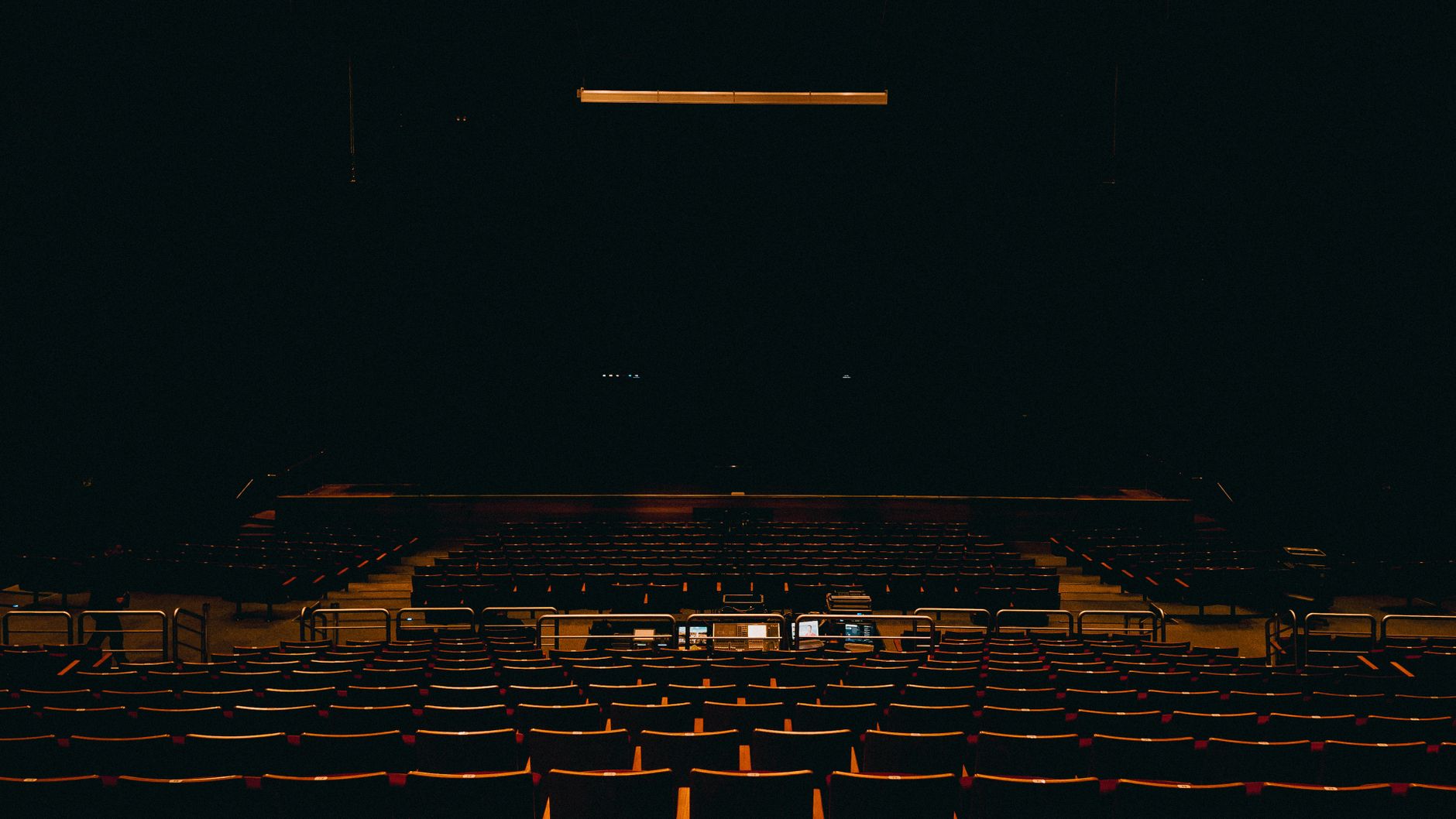
The Phantom of the Opera (1925) is the film that put a mask on horror and dared you to look behind it. Rupert Julian's adaptation of Gaston Leroux's 1910 novel didn't invent the monster in a cape, but it perfected one crucial idea: that the scariest thing in the room is a man, not a creature. Lon Chaney plays Erik, the disfigured musical genius who haunts the Paris Opéra from the cellars below, and his performance makes the case that silent cinema was, for certain kinds of horror, the superior medium.
Lon Chaney and the face beneath the mask
Chaney designed his own makeup for Erik, pulling his nostrils wide with wire, building out his cheekbones, and hollowing the eye sockets until the face resembled a death's-head. When Christine (Mary Philbin) finally tears the mask away in the film's defining scene, Chaney wheels on the camera with an expression so violent it reportedly shocked preview audiences out of their seats. The studio kept the moment intact. It was already too late to soften it.
What Chaney understood, and what directors working a century later still study, is that stillness concentrates horror. Erik doesn't lunge. He turns. He watches. He conducts. The physicality is precise and economical in a way that could never be described as subtle, because everything about the performance is enormous, but it's enormous on Chaney's terms, not the film's instinct to melodrama. There's a scene where Erik stands at the back of the auditorium watching Christine sing, and the frame holds him motionless for several seconds. It's more frightening than anything that happens in the catacombs.
The Paris Opéra as a horror setting
Universal built massive sets for this production, and the scale holds up. The Opéra's grand staircase, its fly space, its mirrored rehearsal rooms: these spaces feel genuinely inhabited rather than constructed. The catacombs beneath, reached by a gondola crossing an underground lake, are shot with a Expressionist chiaroscuro that owes something to Nosferatu (1922), which had appeared only three years earlier. Both films understand that architecture is an instrument of dread. A long corridor lit from one end is already a horror film.
The masked ball sequence deploys colour. The original 1925 release used a two-strip Technicolor process for this section, and prints that preserve it show Erik descending the grand staircase in a crimson costume as the Red Death, an image borrowed from Edgar Allan Poe. The red is saturated and slightly wrong-looking, which in context becomes one of the film's most unsettling visual choices, not despite the technical limitations of 1920s colour photography but partly because of them.
Christine, the Phantom, and the film's strange sympathy
Leroux's novel gives Erik a complicated pathos, and the film retains just enough of it to keep the horror from collapsing into simple villainy. Erik isn't supernatural. He's a composer who lives underground because the world above rejected his face. That's a different kind of gothic, closer to the psychology of the period's grand opera repertoire than to the vampire or the werewolf. The film asks you to feel something for him. It doesn't quite ask you to forgive him, but the distinction is narrower than it should be.
Mary Philbin's Christine is less a character than a function: the beautiful voice Erik wants to possess. This is the film's sharpest limitation. Christine reacts; she doesn't choose. The tension in the final pursuit depends on her helplessness, which was a convention of the period but sits uncomfortably now. Norman Kerry's Raoul fares even worse, a bland romantic lead whose heroism consists mostly of arriving in time.
Neither weakness cancels what Chaney does. He's the film and he knows it, and Julian seems to have understood that the best thing he could do was point the camera correctly and stay out of the way.
Versions, cuts, and what survives
The Phantom of the Opera (1925) exists in several versions, and the confusion is real. Universal re-released the film in 1929 with sound effects, a music score, and new footage, which meant refilming some scenes with different actors. Some prints combine material from both releases in ways that create odd tonal lurches. The most coherent surviving version is generally considered the 1925 original cut, though no complete original negative is known to exist. What survives is reconstructed from several sources.
This is worth knowing not because it damages the film but because it explains some of the rhythm irregularities in the middle section. The pacing around Christine's abduction and Raoul's investigation occasionally stalls in ways that feel less like directorial choices and more like missing connective tissue. The horror sequences are unaffected. Chaney's face doesn't need continuity to work.
The film belongs alongside The Cabinet of Dr. Caligari (1920) as one of the few silent films where the horror hasn't been domesticated by time. The unmasking still lands. The face still works. A century of horror cinema has tried to repeat that moment and hasn't quite managed it, which is perhaps the clearest way to describe what Lon Chaney accomplished.
Verdict
The Phantom of the Opera (1925) is essential cinema. Its romantic subplots creak, its female lead exists mostly to scream, and the print most viewers will encounter carries the marks of a complicated restoration history. None of that undermines the core achievement: Lon Chaney built one of the most frightening human faces in film history and put it in front of a camera for eighty-plus minutes. The unmasking scene is as good as horror gets. The film around it is good enough that the scene doesn't feel like it comes from nowhere. That's the job done.