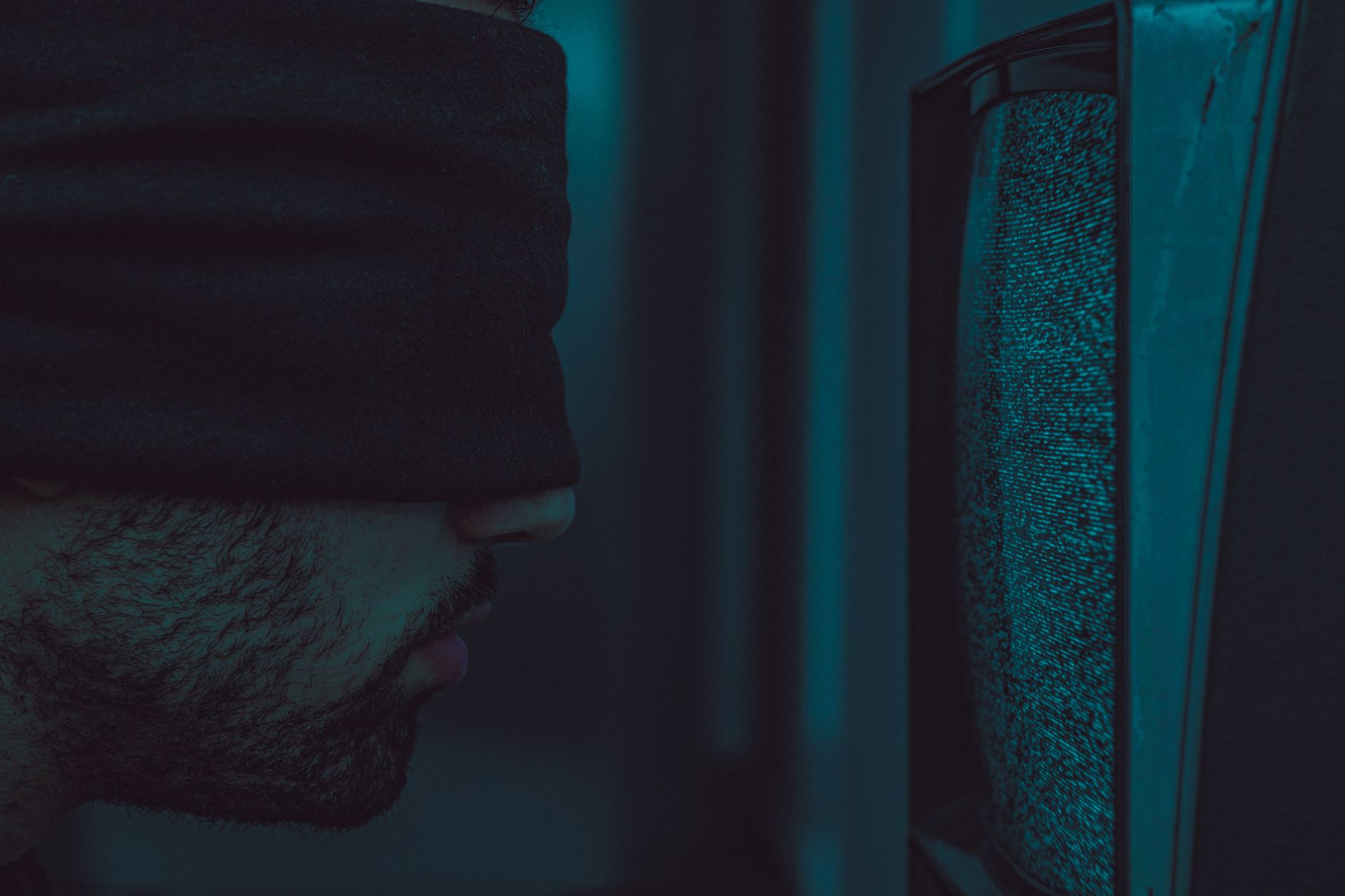
The Ring (2002) opens with two teenagers talking about a videotape that kills whoever watches it. Seven days later, you die. It's the kind of urban legend that should collapse under its own silliness. It doesn't. Within ten minutes, director Gore Verbinski has turned a slumber-party ghost story into one of the most efficiently constructed horror films of the 2000s, and the chilling final act proves it never intended to play fair with the audience.
This review of The Ring (2002) is less about whether the film holds up, because it does, and more about why it holds up when so many of its contemporaries feel dated. The short answer: Verbinski understood that dread is spatial and temporal. The cursed tape gives you exactly seven days. Every scene after the tape plays is haunted by that countdown, whether the script mentions it or not.
What Verbinski built from Nakata's blueprint
The Ring is a remake of Hideo Nakata's 1998 Ringu, itself adapted from Koji Suzuki's novel. Verbinski and screenwriter Ehren Kruger didn't just translate the story; they relocated its nervous system. Where Nakata's film runs on a quiet, clinical dread rooted in Japanese anxieties about technology and the uncanny, the 2002 version is wetter, darker, and more overtly gothic. The Pacific Northwest setting, all grey water and soaked fir trees, replaces Nakata's urban Tokyo and turns the landscape into a co-conspirator.
Naomi Watts plays Rachel Keller, a Seattle journalist investigating the death of her niece. Rachel is drawn to the cursed tape because that's what journalists do. She watches it. The phone rings immediately after. What follows is seven days of research, grief, and slow-building physical wrongness. Watts carries enormous weight here. She's frightened without being passive, smart without being invincible. Her performance keeps the film grounded when its imagery tips toward the surreal.
The tape itself: why it still works
The cursed tape is the film's masterstroke. It runs for about a minute of screen time, and every image in it is wrong: a circular mirror, a centipede crawling from a woman's mouth, a lighthouse, a chair dragged across a floor, a well. Nothing is explained. Nothing connects. The images feel like memories from a mind that came apart.
What makes the tape disturbing isn't any single image. It's the editing rhythm. Each cut arrives slightly too early, so the eye never settles. Composer Hans Zimmer and music supervisor contributes an unsettling score that never resolves harmonically, reinforcing the same disorientation. The tape is less a story than a sensory attack, and it works the same way on a second viewing because the unease is baked into its structure.
Compare this to the jump-scare economy of most 2000s horror: a quiet moment, a sudden noise, a monster face. The Ring barely uses that grammar. Its scares are slow and cumulative. By the time Samara Morgan crawls out of the television, the audience has been softened for 90 minutes by low-grade wrongness. The payoff lands because the setup was patient.
Samara and the logic of the curse
Daveigh Chase plays Samara Morgan, the film's central antagonist, and the performance is extraordinary for reasons that have nothing to do with performance conventions. Chase spent much of the shoot moving in reverse, with the footage later flipped, which gives Samara's physicality a genuinely inhuman quality. She doesn't move like a person, or like an actor pretending not to move like a person. She moves like something that learned locomotion from a corrupted file.
The film's backstory traces Samara to a family on Moesko Island, a horse ranch, and a history of psychic violence. It's gothic enough to be compelling and vague enough to resist overexplanation. The well is the final piece. When Rachel descends into it, The Ring commits fully to its own mythology in a sequence that's genuinely claustrophobic and lit with the kind of care you rarely see in studio horror.
The final act twist, the revelation that solving the curse doesn't save you but merely copies it, reframes everything. The film's last image isn't Samara. It's a blank television screen and an implied question about what Rachel will do next. This kind of moral horror, the kind that implicates the protagonist rather than rescuing her, puts The Ring in conversation with something darker than mainstream horror usually attempts. Hereditary (2018) would push this same idea further: a protagonist who discovers that escaping the horror requires spreading it.
The craft behind the grey palette
Bojan Bazelli's cinematography deserves its own paragraph. The Ring is one of the most visually consistent studio horror films of its era. Bazelli desaturated the image and leaned into greens and blue-greys, so the entire film feels like it's being viewed through standing water. It's not just atmosphere. It's a visual argument: this world is already contaminated, already wrong, before Rachel watches anything.
Verbinski stages set pieces with real spatial intelligence. The scene where Rachel develops photographs in her darkroom and watches a figure emerge from the image is tense because Verbinski holds the shot long enough for the audience to understand the geometry before anything moves. He knows that comprehension and dread are not opposites. The scariest thing is understanding exactly what you're seeing.
That compositional patience connects The Ring to an older tradition of slow-burn horror. Rosemary's Baby (1968) uses the same logic: give the audience enough information to be afraid before the threat becomes explicit, then let the final revelation play against their accumulated tension. Both films trust their audiences to stay frightened without constant provocation.
What the film gets wrong
It's not flawless. The subplot involving Martin Henderson's Noah is underwritten. He functions mainly as a sounding board for Rachel's theories and a body for the third act, and Henderson doesn't have enough material to make Noah feel consequential. The film also rushes through the Moesko Island investigation in its second half, condensing backstory that might have benefited from another ten minutes.
The horse-on-the-ferry sequence is viscerally effective but slightly disconnected from the surrounding film, as though Verbinski wanted a set piece there and built backward. It works on its own terms. It fits less neatly into the narrative logic than everything else does.
Why the 2002 version is still the one to watch
The Ring (2002) sits at the point where J-horror's formal discipline met Hollywood's production resources, and the result was a film that introduced an entire American generation to a different grammar of fear. It didn't rely on gore. It didn't rely on monsters in the conventional sense. It relied on contamination: the idea that knowledge itself could be lethal, that seeing something could mark you.
That idea hasn't aged. In a media landscape where images spread faster than understanding, the cursed tape feels less like a supernatural conceit and more like an allegory that keeps finding new applications. The Ring earned its place in the canon not by being the loudest horror film of 2002 but by being the most precise. The Ring (2002) is available on major streaming platforms and remains required viewing for anyone serious about American horror in the early 2000s.