The Texas Chain Saw Massacre 2 (1986) is one of the strangest sequels in horror history. Tobe Hooper made the original in 1974 with almost no money, a punishing Texas summer, and a cast and crew pushed to the edge. That film felt dangerous in a way that was half-accidental. When Hooper returned twelve years later, nothing about the approach was accidental. The sequel is deliberate, noisy, and coated in so much fake blood it practically drips off the screen. Whether that's a betrayal of the original or a smart act of self-preservation depends entirely on what you want from a follow-up.
What the film is actually doing
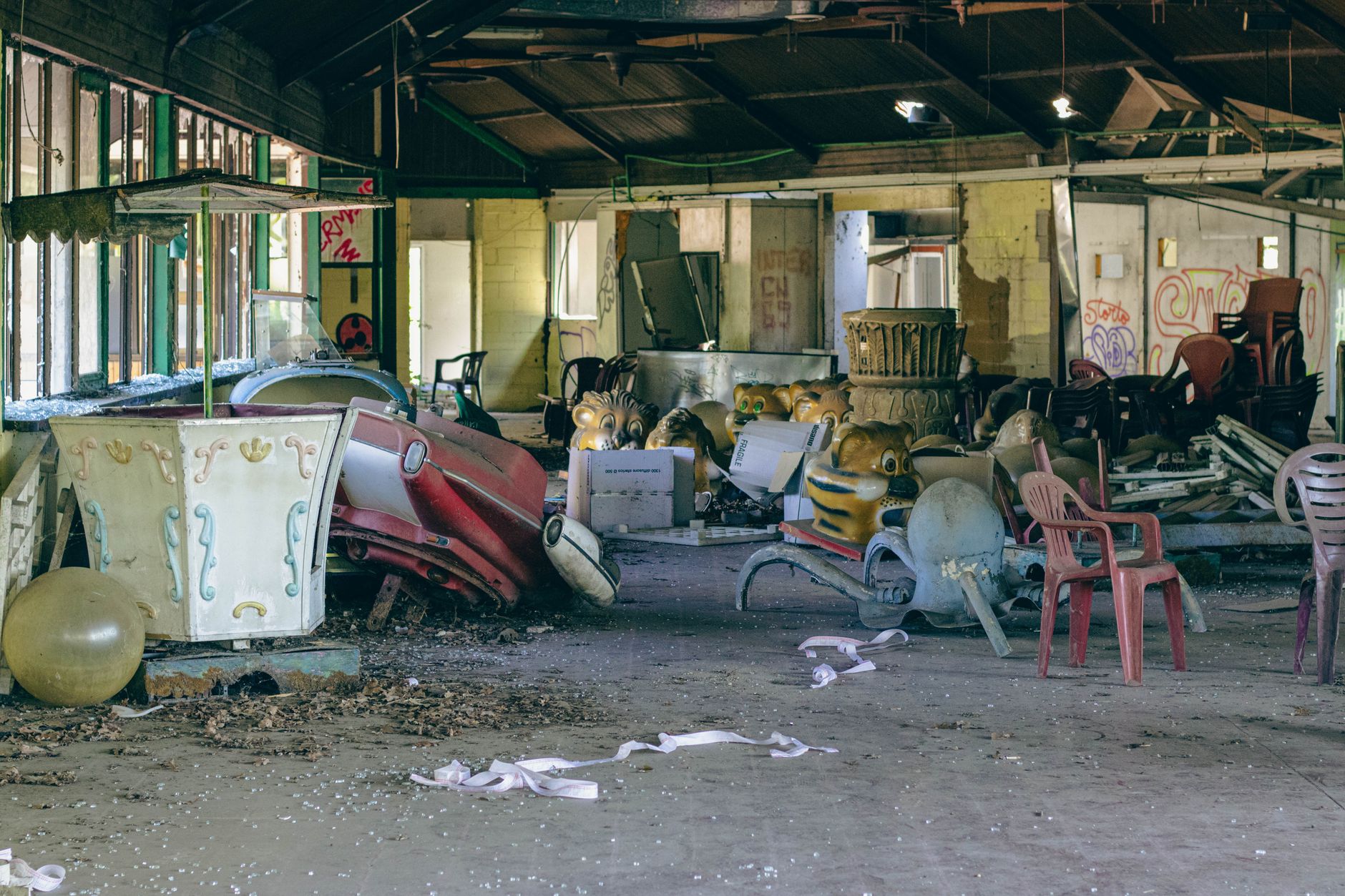
Hooper has said publicly that he never wanted to make a straight remake of the first film. He took the Sawyer family, the cannibalism, and Leatherface, then dropped them into something closer to a pitch-black comedy. The plot follows Stretch, a Dallas radio host played by Caroline Williams, who accidentally broadcasts audio of a Sawyer family killing over the airwaves. Dennis Hopper shows up as a vengeance-obsessed Texas Ranger named Lefty Enright. The two of them converge on the family's underground lair beneath an abandoned amusement park. It sounds insane. It is insane. Hooper seems to know this and treats it as a feature rather than a bug.
The film positions itself as a companion piece to the original rather than a continuation of its tone. Hooper even structured the opening credits as a parody of the first film's, complete with a sardonic voiceover that mocks the true-crime documentary frame the 1974 version used. That self-awareness runs through the whole picture. It's the difference between a director who has lost control of the material and one who has decided the material is a joke he's in on.
Caroline Williams and the film's one anchor
Williams is the reason the film holds together at all. Stretch spends a large portion of the third act trapped in the Sawyer family's lair, and Williams plays genuine terror inside an almost cartoonish environment. That's hard to do. She's not screaming at a monster in a conventional sense. She's screaming at Leatherface while he does something disturbingly intimate with a chainsaw, and the film asks her to make that feel real. She mostly succeeds. Her performance keeps the film from completely collapsing into parody.
Dennis Hopper, by contrast, plays Lefty at maximum volume from the first frame. He delivers his lines like a man standing too close to a speaker. The character is written as a figure of righteous, futile obsession, and there's something there, but Hopper never quite settles on a register. His climactic chainsaw duel with Leatherface is exactly as absurd as it sounds.
Tom Savini and the special effects question
Tom Savini handled the practical effects, and they're extraordinary. The work on the Sawyer family itself is grotesque in a way that serves the film's comic-horror tone. Chop Top, played by Bill Moseley in his breakthrough role, is a character built around physical performance and prosthetic design in equal measure. Moseley scratches at a metal plate in his skull with a wire hanger throughout the film, and Savini's construction of that detail makes it genuinely nauseating. The gore throughout is extravagant rather than realistic. That's the right call for a film operating in this register.
Hooper used the original The Texas Chain Saw Massacre (1974) as a film that suggested violence rather than showed it. The sequel inverts that entirely. It shows everything. Some critics at the time read this as excess without purpose. Watching it now, the excess feels deliberate: Hooper was critiquing the slasher cycle that his own first film helped create, a cycle that had commodified the original's DIY dread into increasingly glossy, bloodsoaked product. By going further than any of those films, he was pointing at the absurdity of the escalation.
The amusement park lair: horror as theme park
The production design by Cary White is one of the film's underrated achievements. The Sawyer family lair is built from bones, refuse, rotting food, and the accumulated debris of a killing operation spanning years. It's revolting and also genuinely inventive. Moving the family underground into a literal funhouse turns the film's subtext into its setting. Horror as entertainment, death as spectacle, the audience paying to see something terrible. The Texas Chain Saw Massacre 2 is deeply cynical about what horror films ask their viewers to enjoy, and it builds that cynicism into every corner of its set design.
That reading might be too generous. The film is also, frequently, just messy. The pacing in the second act drags. The comedy doesn't always land. Hopper's arc goes nowhere particularly satisfying. There are sequences that feel unfinished, moments where the budget visibly runs out. A film making an argument about excess probably shouldn't have sections that feel underbaked. These aren't small problems.
How it sits forty years on
The Texas Chain Saw Massacre 2 failed at the box office on release and received mixed reviews. Its reputation has been rebuilt steadily over the decades, particularly among critics interested in the political and satirical dimensions of 1980s horror. It shares some DNA with Re-Animator (1985), another film from the same period that treated horror as dark comedy and used extreme gore as a punchline rather than a shock. Both films were accused of going too far. Both have outlasted most of their more respectable contemporaries.
The film's cult status is now well established, and it's easy to see why. It's committed to its own lunacy in a way that demands a certain kind of respect. Hooper made exactly the film he wanted to make. It's not the film most people wanted him to make. That gap between intention and reception is part of its history now. The Texas Chain Saw Massacre 2 is raucous, excessive, messy, and occasionally brilliant. It won't convert anyone looking for the sustained, unrelenting dread of the original. For viewers willing to meet it where it stands, it delivers something few sequels manage: a genuinely different argument about what its franchise was always about.
Bill Moseley's Chop Top alone is worth the runtime. He is one of the great horror performances of the 1980s, unhinged in a register so precise it barely reads as acting at all.
Verdict
Tobe Hooper's Texas Chain Saw Massacre 2 is a deliberately excessive, blackly comic horror film that subverts its own franchise with more intelligence than it's usually credited for. Caroline Williams holds the film's emotional centre together, Tom Savini's effects work is extraordinary, and Bill Moseley's Chop Top is a creation that deserves its cult status. The pacing is uneven and the satire isn't always sharp enough to justify the chaos. But as an act of directorial refusal, as a horror film that turns its own genre inside out, it's impossible to dismiss.