28 Days Later (2002) is the horror film that woke up in an empty hospital and found the world had moved on without it. Danny Boyle's infected thriller arrived at a precise cultural moment: 2002, a year still shaking from collective trauma, when the idea of civilisation collapsing overnight felt less like fantasy and more like a contingency plan nobody wanted to read. Alex Garland's screenplay gives the premise a clean, brutal logic. A chimp infected with a virus called "Rage" bites an activist. Twenty-eight days later, Jim (Cillian Murphy) opens his eyes in an NHS ward to find London silent, littered, and very much not safe.
What the film gets right about the end of the world
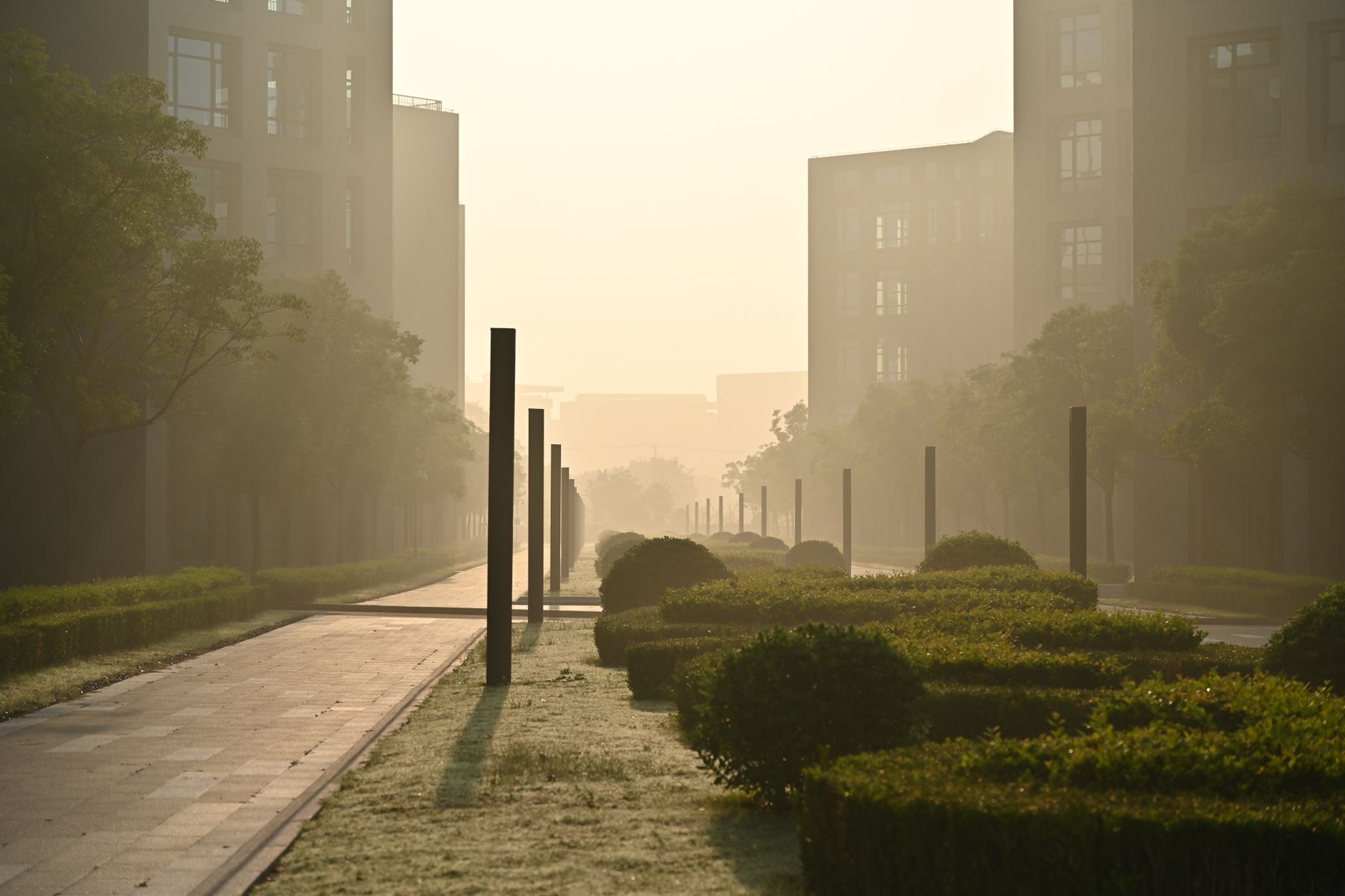
The early sequences earn their reputation. Boyle shot on digital video, a deliberate choice that gives the film a flatness, an almost documentary texture that makes the deserted streets of London feel genuinely plausible rather than constructed. The shots of Jim walking across Westminster Bridge, through Piccadilly Circus, past shuttered shops and overturned bins carry a specific quality of wrongness. London isn't destroyed. It's just empty. That distinction is where the film's real horror lives.
The infected are not zombies, and the film insists on that distinction throughout. They don't shuffle. They sprint, screech, and bleed from the eyes. The Rage virus doesn't animate the dead; it strips the living down to pure, overwhelming aggression. That one shift in gear changed what the genre could do with human antagonists, and films like [REC] (2007) owe a clear debt to the infected model Garland and Boyle established here. The threat feels biological rather than supernatural, which makes it measurably worse.
The cast and what they carry
Cillian Murphy was barely known in 2002, and Boyle uses that anonymity well. Jim isn't a hero by temperament. He's a bicycle courier who woke up in a disaster and keeps moving because the alternative is to stop. Murphy plays the gradual stripping away of his character's passivity with real care. By the film's third act, Jim commits acts of violence that the first-act Jim would not recognise in himself. That arc is the film's quietest accomplishment.
Naomie Harris plays Selena with a bluntness that was unusual for a female character in mainstream horror at the time. Selena has already decided that survival requires emotional amputation. She tells Jim in the first act that she'd kill him within a second if she thought he was infected. She means it. The partnership between Jim and Selena works because neither character defers to the other; they negotiate a truce with the world through each other.
Brendan Gleeson arrives as Frank and brings a warmth the film could easily have done without but is enormously better for having. His death is one of the decade's best-executed horror set pieces: quiet, stupid, utterly arbitrary. A single drop of blood. That's all it takes. The scene's horror isn't the violence; it's his daughter Hannah watching her father become something else in under ten seconds.
Christopher Eccleston and where the film gets complicated
The film's third act divides opinion, and fairly so. When Jim, Selena, and Hannah reach the military compound run by Major Henry West (Christopher Eccleston), the infected recede and the real monster steps forward. West has promised his soldiers women. He intends to keep that promise. The critique of military hierarchy collapsing into sexual predation is pointed and largely earns its place, though Boyle and Garland handle the material more bluntly than they do the early-act dread.
What the third act does successfully is extend the film's central thesis: Rage doesn't belong exclusively to the infected. Jim's final killing spree, methodically releasing infected into the compound and hunting soldiers in the dark, mirrors the behaviour the film has spent ninety minutes treating as monstrous. Boyle shoots it as both triumph and horror simultaneously. Jim survives. He also becomes, briefly, something his allies couldn't safely stand next to.
That ambiguity connects 28 Days Later to a strand of British horror that keeps asking what ordinary people become under extraordinary pressure. The Descent (2005), another British horror film from the same era, poses almost exactly the same question inside a cave system rather than a ruined England, and arrives at a similarly bleak answer about the distance between survival and humanity.
John Murphy's score and the digital grain
The film's aesthetic choices have dated in specific ways. Digital video from 2002 has a quality distinct from both film grain and modern digital cinematography. Some scenes look genuinely raw; others look underfunded in ways Boyle didn't fully intend. But John Murphy's score has not aged at all. The track "In the House, in a Heartbeat" builds from a single piano motif into something overwhelming, and it works in 2026 exactly as it worked on first release. It's one of horror cinema's most effective musical constructions: familiar enough to feel domestic, relentless enough to feel like inevitability.
What it changed and what it is
28 Days Later changed the grammar of infected and zombie fiction so completely that the change is now invisible. The sprinting Rage-infected became the default model. They appear in the Zack Snyder Dawn of the Dead remake released just two years later, in videogames, in the television adaptation of The Walking Dead, in countless films that have since decided slow-moving corpses aren't frightening enough. Garland's screenplay also established the post-apocalyptic survivor thriller's standard structure: immediate threat, fragile sanctuary, sanctuary betrayed. That structure is now so ubiquitous it reads as genre furniture.
None of which diminishes what 28 Days Later actually is when you sit down with it: a precise, angry, emotionally committed piece of British horror filmmaking that asks what the end of the world costs the people who survive it. The theatrical ending, in which Jim, Selena, and Hannah spell out HELLO in a field and watch a fighter jet bank toward them, is one of horror cinema's most hard-won moments of relief. Boyle earned it. It almost feels hopeful. Almost.
The Fox Searchlight release opened in the UK in November 2002 and in North America in 2003, eventually grossing over $82 million on an eight-million-dollar budget. A sequel, 28 Weeks Later, followed in 2007. A third film, 28 Years Later, reached cinemas in 2025, with Danny Boyle returning as director. The franchise earned the follow-up. The original earned its place among the definitive British horror films, alongside the quiet dread of The Wicker Man (1973) and the physical extremity of The Descent.