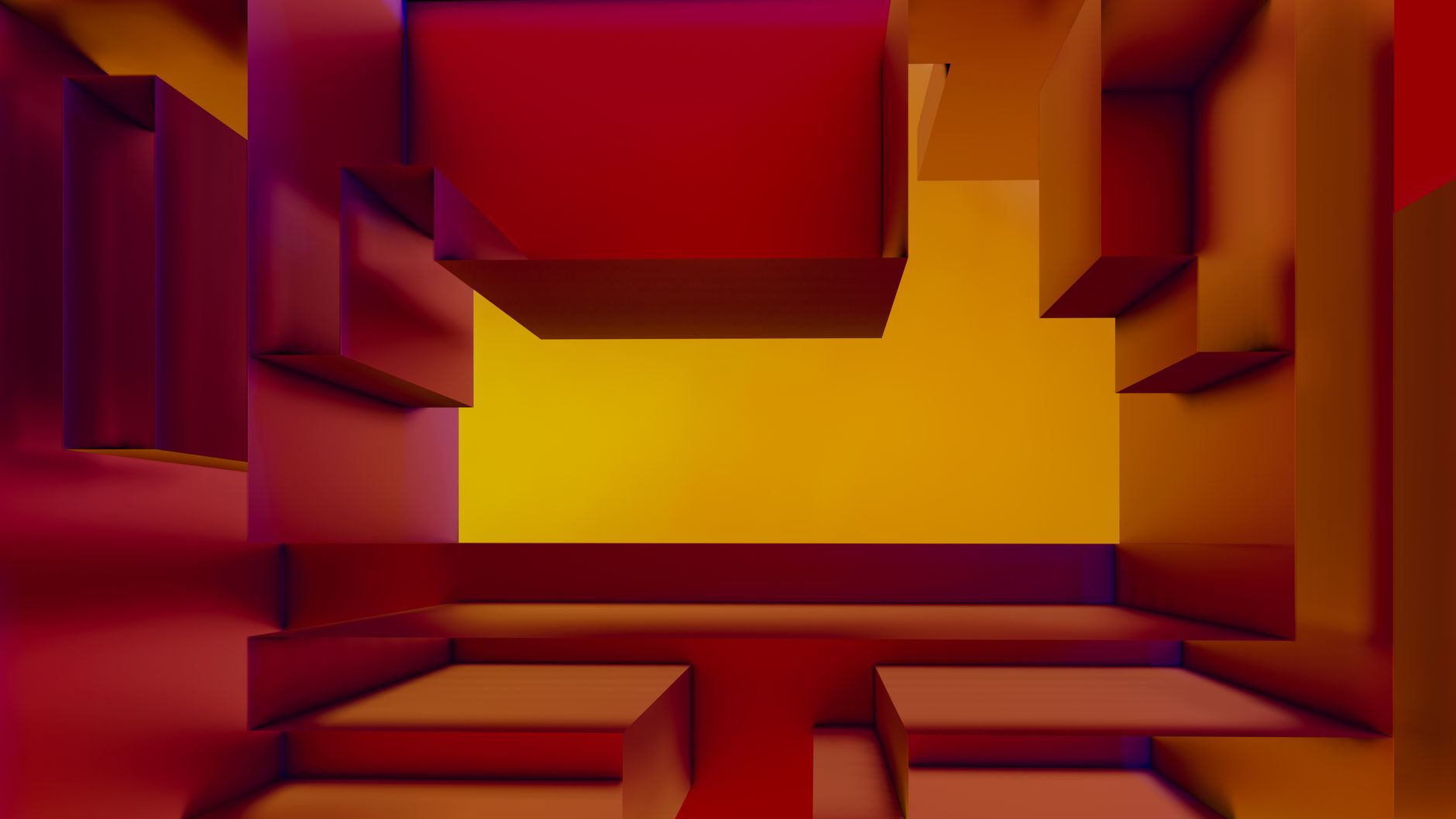
Cube (1997) is the film that proves you don't need a monster. You need a room. Six rooms, actually, each one identical to the last, each one potentially rigged with a trap that will bisect you or dissolve your face before you can blink. Vincenzo Natali's debut feature built its entire nightmare from a single, ruthless premise: six strangers wake up inside a vast, colour-coded cubic structure with no memory of how they arrived and no idea who put them there. That's it. No backstory handed to you. No omniscient villain explaining the rules. Just the cube itself, waiting.
What Cube (1997) is actually about
The film wastes no time on pleasantries. Within the first two minutes a man walks into a room and is reduced to a grid of cubes by a wire mesh that descends from nowhere. The message is immediate and unambiguous: this place kills, it kills without warning, and it kills beautifully. From that opening, Natali introduces his six survivors: Quentin (Maurice Dean Wint), a cop who immediately assumes command; Leaven (Nicole de Boer), a mathematics student; Worth (David Hewlett), a hollow-eyed man who seems to know more than he admits; Holloway (Nicky Guadagni), a doctor and conspiracy theorist; Rennes (Wayne Robson), a career escape artist; and Kazan (Andrew Miller), a savant with a profound developmental disability who barely speaks.
The group's only tool is pattern recognition. Leaven figures out that the numbers stamped on each hatch correspond to coordinates, and that some rooms carry prime numbers in their sequences. Prime rooms are the deadly ones. It's a clean, satisfying logic that gives the film its procedural momentum, but Natali is too smart to let the puzzle stay stable. The rules shift. The math gets harder. And the people get worse.
The real trap is the people
This is where Cube separates itself from lesser escape-room horror. The geometry is the backdrop. The actual horror is what six people do to each other when survival feels finite. Quentin starts as the competent authority figure and slides, incrementally and terrifyingly, into something predatory. Wint's performance is the film's sharpest instrument: he doesn't flip a switch from good to monstrous. He ratchets. Each scene finds him slightly further from the man he was at the start, until you realise you've watched a believable descent without quite being able to name the moment it began.
Worth is the counterweight. Hewlett plays him as a man who has already given up, who carries a piece of information so corrosive he's chosen blankness as a coping mechanism. His eventual revelation about the cube's origins is one of the film's most unsettling ideas: not that the structure was built by a sinister genius with a plan, but that it was built by a bureaucracy. Nobody is in charge. Nobody knows what it's for. The cube exists because committees of people approved its components without anyone understanding the whole. That idea lands harder than any trap in the film.
The claustrophobic logic here echoes the best of its 1990s peers. Like Event Horizon (1997), which arrived the same year, Cube understands that the most frightening environments are ones where the architecture itself seems to have intentions.
What Natali does with almost nothing
The production budget was roughly $350,000 Canadian. There is, essentially, one set. Natali and cinematographer Derek Rogers use different coloured lighting gels to make each room feel distinct despite being physically identical, and the effect works completely. Red rooms feel like the inside of something alive. Green rooms feel like illness. Blue rooms carry a cold, administrative dread. The limitation becomes a formal strength: you can't rely on location or spectacle, so every frame has to earn its tension through staging and performance.
The traps themselves are inventive without tipping into torture-porn excess. A razor-wire sequence is genuinely horrifying. A heat-based room leaves nothing to the imagination. But Natali cuts away from the worst of it, which is the right instinct. The suggestion of what the cube can do is more frightening than prolonged display. He learned the same lesson Robert Wise absorbed making The Haunting (1963): what you don't show stays in the viewer's head longer than anything you do.
Kazan deserves his own paragraph. Miller's performance is sympathetic without being sentimental, and the film's decision to make him the character with the savant mathematical ability to solve the cube's final sequence is both its most humanist gesture and its cleverest structural move. The person everyone is tempted to write off is the only one with the specific skill the situation demands. Natali doesn't labour the point. He just lets it land.
Where it falls short
The dialogue is the film's weakest element and it's worth naming. Characters articulate their emotional states and philosophical positions with an explicitness that feels written rather than spoken. Holloway's speeches about government conspiracy, Quentin's blunt assertions of dominance: they function as thematic placards when the situation itself would communicate the same ideas more efficiently. The cast compensates with physicality, but there are stretches where the script is working harder than it should have to.
The ending divides people. Kazan walks out into white light. That's all we get. No explanation of the cube's purpose, no rescue, no context. For some viewers this feels like a cop-out. For others it's the only honest ending a film with this premise could offer. Natali commits to the ambiguity fully, which takes nerve when you've spent 90 minutes teasing a resolution. The cube doesn't explain itself because it doesn't have a self. It just is. That's the point, and whether you find it satisfying depends entirely on how much you need horror to gesture toward meaning rather than simply embody it.
Why it still holds up
Cube arrived in 1997, the same year as Scream (1996)'s self-aware wave was reshaping mainstream horror. Natali went the opposite direction: no winks, no genre awareness, no acknowledgement that horror films even existed. The cube is treated with complete seriousness, and that rigour is what makes the film last. It spawned two sequels, neither worth your time, and the concept was remade in Japan in 2021. None of them come close.
What Cube gets right, and what almost no imitation has managed since, is the idea that the maze is morally neutral. It doesn't punish the guilty or spare the innocent. It processes people the way a machine processes anything: without judgment, without intention, without pause. In a late-1990s genre landscape full of knowing irony and telegraphed scares, that blankness was startling. It still is.
At 90 minutes, with a single location and six actors, Vincenzo Natali made a film that horror directors with ten times the budget and three times the runtime have spent decades trying to replicate. The math, it turns out, was always in its favour.