Let's Scare Jessica to Death (1971) is one of American horror's most underappreciated films. John Hancock's debut feature arrived the same year as The Andromeda Strain and The Omega Man, and most audiences looked straight past it. That's a mistake worth correcting. The film is a sustained act of psychological unease that operates like a rumor you can't stop repeating: the more you turn it over, the less solid it becomes.
What the film is, and what it isn't
The setup is deceptively simple. Jessica (Zohra Lampert) is a woman recently released from a psychiatric institution. She, her husband Duncan, and their friend Woody drive out to rural Connecticut to start over on a run-down farmhouse they've bought. There's a stranger already living there, a young woman named Emily who agrees to stay on. Almost immediately, Jessica starts hearing voices. She sees a figure in white moving through an apple orchard. The local townspeople wear bandages on their necks and avoid direct conversation. The question the film raises early and refuses to resolve cleanly is this: is Jessica relapsing, or is something genuinely wrong?
What makes Let's Scare Jessica to Death worth your time is that it commits to both possibilities simultaneously. The film never cheats by tipping decisively in either direction for long. It uses Jessica's internal monologue as a Greek chorus, her whispered voice-over reflecting on what she sees in real time, and the gap between what she narrates and what appears on screen becomes the primary source of horror. She doubts herself before we can doubt her. That's a neat and genuinely unsettling trick.
Zohra Lampert carries everything
Lampert's performance is the reason this film works. She plays Jessica as someone who is trying very hard to be rational, someone who has been told her perceptions can't be trusted and has internalized that lesson deeply. There's a quiet desperation in every scene: she wants to believe in the farmhouse, in the fresh start, in the beauty of the landscape. She keeps almost convincing herself. Lampert communicates fragility without ever playing it as weakness, and that's a genuinely difficult balance.
The supporting cast is thinner but functional. Mariclare Costello brings an unnerving blankness to Emily, the kind of stillness that reads as either sociopathic or supernatural depending on your current theory. Kevin O'Connor as Duncan is mostly ineffective at his job of being oblivious, which is precisely what the script requires of him.
How Hancock builds dread without money
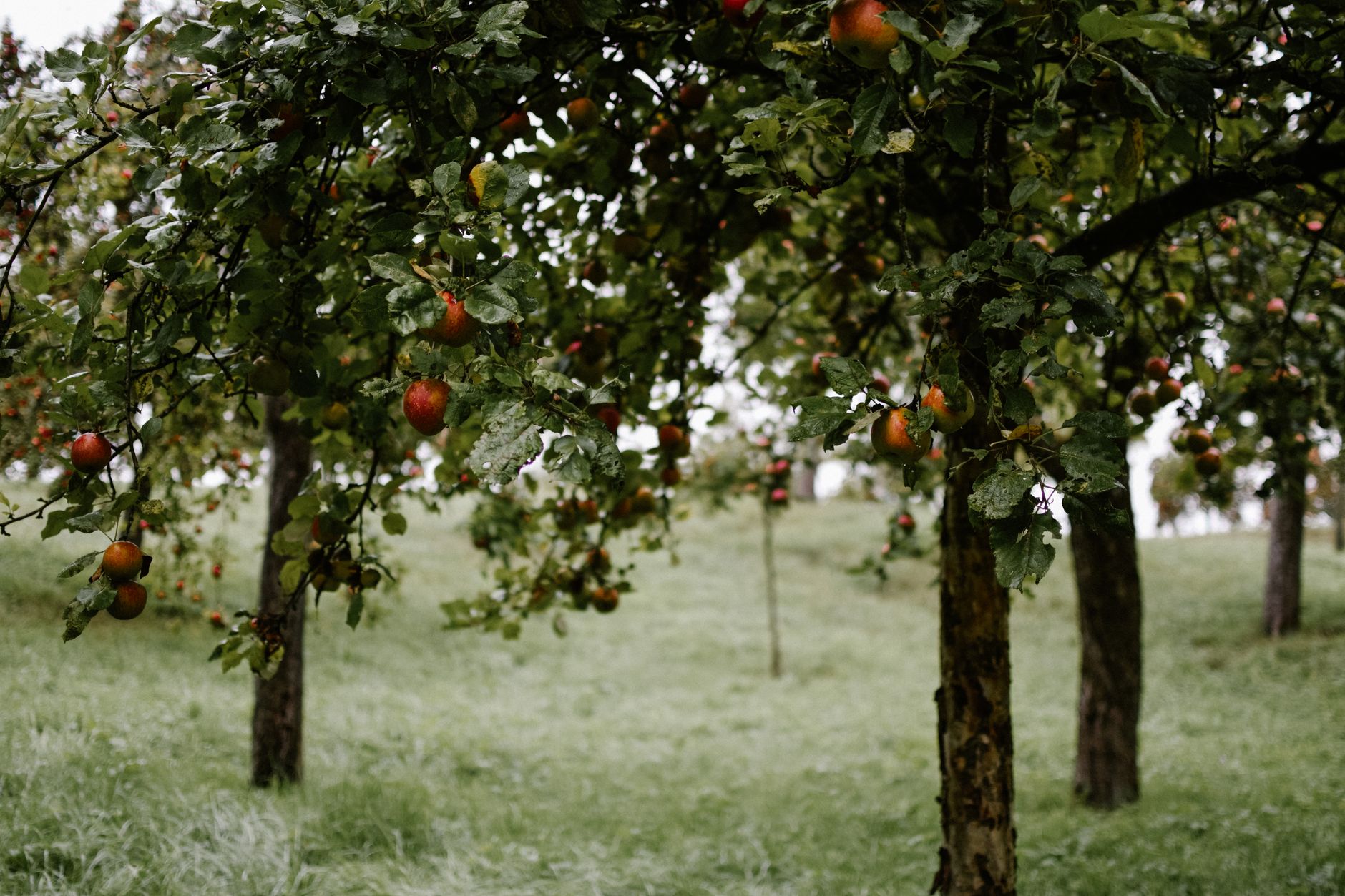
The film was shot for roughly $1 million in Connecticut, and Hancock makes the landscape do most of the heavy lifting. The orchard, specifically, becomes the film's central image. Apple trees in late autumn have a particular quality: bare branches, residual fog, pale light. Hancock and cinematographer David Quaid use the location to create compositions that feel tilted just past comfort. Nothing in the frame is exactly wrong. The wrongness accumulates.
The score by Orville Stoeber leans on strings and a recurring melodic motif that sounds like a nursery rhyme with a note missing. It's not subtle, but it works. The film is only 89 minutes long and uses almost every minute efficiently, which is not something you can say about most low-budget horror from the period. Compare it to the extended, contemplative silences in Carnival of Souls (1962), another film built on a shoestring and a single atmospheric location: both films understand that the camera dwelling on something ordinary is its own kind of threat.
The vampire element, and why it's handled carefully
The film eventually introduces a vampire mythology, loosely tied to a local legend about a young woman named Abigail, who drowned in the 19th century and may have returned. The townspeople's bandaged necks start to cohere into a pattern. But Hancock never makes this explicit in a way that would defuse the psychological reading. Emily could be Abigail reincarnated, or she could be a woman who has manipulated a fragile person into a psychotic episode. The film supports both interpretations structurally.
This is where Let's Scare Jessica to Death earns its place alongside the more formally celebrated psychological horror films of the era. It shares DNA with Repulsion (1965), where a woman's internal collapse reshapes the physical world around her, and with a strain of American Gothic that treats landscape as a symptom. The farmhouse is beautiful and wrong in exactly the way beautiful things in horror tend to be.
Its weaknesses, plainly stated
The film isn't flawless. The pacing sags in the middle section, around the point where Duncan and Woody's subplot involving the townspeople fails to generate any real tension. Some of the supporting performances from the local actors are flat in ways that read as inexperience rather than stylistic choice. The ending, while appropriately ambiguous, arrives abruptly enough that it feels less like a decision than a budget constraint.
None of these problems are fatal. They are the texture of low-budget American genre filmmaking in the early 1970s, and they're worth knowing about rather than glossing over.
Why it still works in 2026
The horror in Let's Scare Jessica to Death is the horror of not being believed. Jessica's voices, her visions, her instincts, all of them are systematically dismissed by the people around her. Her own history of mental illness is used against her, not cruelly but casually, which is somehow worse. The film was made in 1971 and the dynamic it describes is not historical.
Anchor Bay released a solid DVD transfer years ago, and the film is currently available to stream on Paramount+, which distributes the Paramount library that holds this title. It deserves a proper new restoration, but in the meantime it's watchable enough for a film of its age and origin.
Watch it for Lampert. Watch it for the orchard. Watch it because it refuses to tell you whether the thing pursuing Jessica is inside her head or outside her window, and because by the end you'll have stopped being sure the distinction matters.