Penda's Fen (1974) is the folk horror film that doesn't behave like one. It has no coven, no ritual, no single monster you can point to and name. What it has instead is a landscape that thinks, an England that remembers things Christianity would rather it forgot, and a teenage boy in the middle of breaking apart. Directed by Alan Clarke for the BBC's Play for Today strand, it aired on 21 March 1974 and then essentially vanished for decades, circulating on bootleg tapes and whispered recommendations before the BFI restored and re-released it in 2016. Watching it now, the surprise isn't that it disappeared. The surprise is that it was ever made at all.
What the film is actually about
Stephen Franklin is 18 years old and living in the village of Pinvin, in Worcestershire, at the edge of the Malvern Hills. He's the son of a Church of England vicar, a committed conservative, and a devoted admirer of Edward Elgar. He is also, in ways he cannot yet name, gay. Over the course of the film, each certainty Stephen holds about himself collapses. His parentage turns out to be a lie. His sexuality surfaces in visions he can neither suppress nor understand. His church fails him. And the land around him, the hills, the fields, the buried history of a pre-Christian England, starts to speak.
David Rudkin wrote the script, and it's worth being precise about what he built. Penda's Fen is not primarily a horror film in the genre sense. It's a coming-of-age drama, a piece of political theology, a vision of English identity, and a ghost story, all at once. The horror is structural. It comes from the collision between the tight, ordered world Stephen thinks he inhabits and the older, stranger one that keeps breaking through.
Alan Clarke's direction and the Malvern Hills
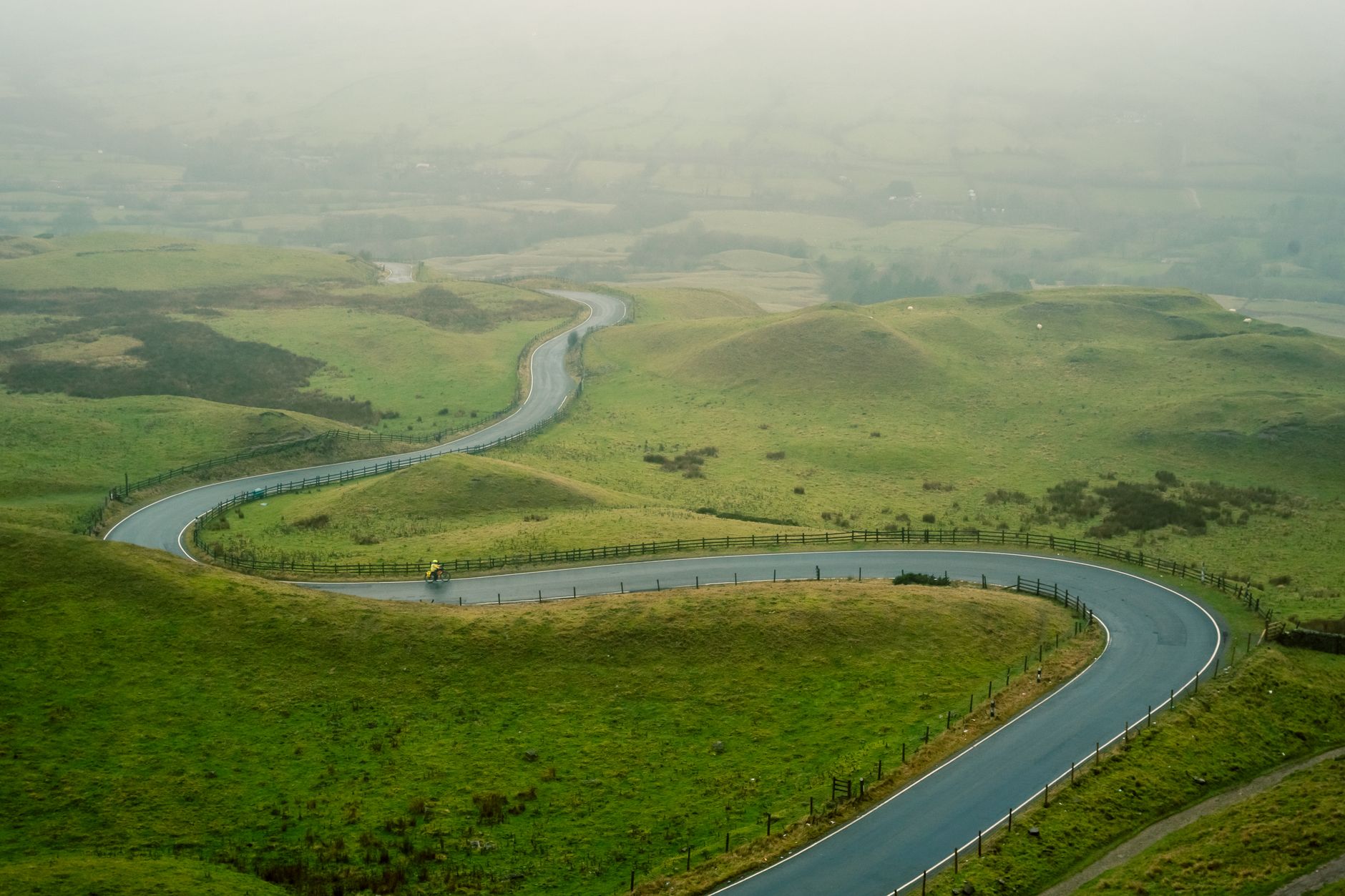
Clarke is better known for social realist television: Scum, Made in Britain, work that puts a camera close to people in institutional crisis. Here he does something rarer. He points that same unblinking attention at countryside and lets it become uncanny. The Malvern Hills are shot as neither pretty nor threatening. They're simply present, with a weight that accumulates across the 90-minute runtime. By the final act, the hills feel older than any building in the film.
The visions Clarke stages are deliberately low on spectacle. Angels appear as figures in a field, barely distinguishable from farm workers. A demon materialises in a bedroom with no special effects, just proximity and a voice. Penda himself, the last pagan king of Mercia, shows up in the final scene as an old man in simple clothes. Clarke doesn't sensationalise any of it. The restraint is what makes it work. The uncanny needs ordinary light to survive.
This approach connects Penda's Fen to a broader tradition of British folk horror that found its terror in the rural and the ancient. Where The Wicker Man (1973) deployed ritual and performance, Clarke's film locates its dread in geology itself, in the fact that the ground beneath England holds beliefs that never fully died.
Spencer Banks and the performance at the centre
Spencer Banks plays Stephen, and the performance is the film's engine. Banks was 23 at the time and had been known primarily from children's television. Nothing in his prior work suggested what he does here. Stephen is initially a prig: censorious, self-righteous, quick to condemn classmates he considers degenerate. Banks doesn't soften this. He plays the priggishness straight, so that when the cracks open and Stephen's certainty starts failing, the disintegration reads as genuine rather than convenient.
The film asks Banks to carry sequences that could easily collapse into embarrassment: a boy arguing with an angel, a teenager confronted by his own erotic imagination, a young man weeping in a field at the news of his false parentage. Not one of those scenes collapses. Banks stays in the reality of each one, and that commitment is what keeps the supernatural elements grounded.
Rudkin's script: politics, theology, and the pagan substrate
Rudkin was writing in 1974, in a Britain of power cuts, industrial strikes, and deep uncertainty about national identity. That context is in the film without being stated. Penda's Fen is explicitly interested in what England is, what it represses, and who gets to define it. Stephen's conservative politics, his initial certainty that order and tradition are the highest values, is the target of the film's most pointed scrutiny.
What Rudkin proposes, through a dream sequence and the figure of the dying Elgar, is a different England. Not the England of empire and church and settled certainty, but the older, mixed, mongrel country underneath. Penda, the 7th-century Mercian king who refused Christianity and died fighting for his gods at the Battle of Winwaed in 655 AD, becomes the symbol of this buried self. His "fen" is a metaphor for the repressed: the dark, wet ground beneath the ordered surface.
The film's final speech, delivered to Stephen by the vision of Penda, calls him to be "nothing pure." It's one of the most radical endings in British television. The instruction is to hold contradiction, to refuse the comfort of any fixed identity, to remain impure and therefore alive to what the world actually contains. Coming from a BBC drama in 1974, it reads as a minor miracle of production.
Folk horror, identity, and the uncanny pastoral
The early 1970s were the peak of folk horror in British film and television, a moment when the countryside stopped being a refuge and started being a threat. Penda's Fen belongs to that moment but twists it. The threat here isn't external. It isn't a cult or a monster coming for Stephen. The threat is Stephen's own identity, the parts of himself he's tried to bury as thoroughly as England buried its pagan history. The landscape doesn't prey on him. It insists on honesty.
That's a distinction worth holding. Much folk horror treats the rural as an active danger, a place where old forces consume those who stumble in. Penda's Fen treats the rural as a mirror. What Stephen sees in the hills is himself. The horror, such as it is, comes from the confrontation with what he's been taught to deny.
This makes the film a useful comparison point for films where landscape and psychological state become indistinguishable. Picnic at Hanging Rock (1975), made the following year in Australia, does something structurally similar: a landscape that absorbs characters into itself, with questions that the film refuses to answer. Both films trust the environment to carry meaning that the narrative won't explain directly.
The BFI restoration and where the film stands now
The BFI released a restored version in 2016, first on DVD and later on BFI Player. The restoration matters practically: the original broadcast tape had degraded and bootleg copies had been circulating in poor condition for years. The cleaned-up version makes Clarke's visual choices legible in ways they previously weren't. The hills are sharper. The pacing, never fast, reads as deliberate rather than decayed.
Critical reassessment followed the restoration. Penda's Fen is now regularly cited alongside The Wicker Man and Witchfinder General as one of the defining works of British folk horror. That company is justified, though the film earns its place differently from either of those. It's quieter, more interior, more explicitly theological. The violence it commits is conceptual, not physical.
What Clarke and Rudkin made is a film about England's unconscious. Not a comfortable subject, and not a comfortable film. Stephen emerges from it without answers, without resolution, without the settled identity he started with. He has only the instruction to remain impure, remain unfinished, remain alive to the buried ground beneath him. Fifty-two years on, that instruction hasn't dated.