The Changeling (1980) is the haunted-house film that most people discover in a recommendations list and emerge from shaken, wondering why nobody told them sooner. Peter Medak's Canadian production is slow, measured, and almost aggressively understated for its era, and that restraint is exactly what makes it work. George C. Scott plays John Russell, a composer who relocates to Seattle after losing his wife and daughter in a roadside accident. The house he rents from the local historical society is enormous, Victorian, and occupied. What follows is one of the most carefully constructed ghost stories in cinema.
Grief as the engine of the haunting
The Changeling works because it roots its supernatural machinery in something real. John's grief isn't background detail. It's the reason he's in that house, the reason he's alone, and the reason the ghost reaches him specifically. Medak spends the first ten minutes letting you feel the weight of the accident before a single strange thing happens. That upfront emotional investment pays out across the whole film.
George C. Scott was known for playing men of enormous force: Patton, the various generals and prosecutors and antagonists across his career. Here he plays a man who has been cracked open. The performance is quiet in a way that feels deliberate and slightly painful. Scott doesn't reach for pathos. He just shows a person going through the motions of a new life while something inside him has stopped. When the house starts communicating with him, his response is methodical rather than hysterical. That choice, staying functional in the face of the inexplicable, makes John feel real and makes the horror feel realer.
What the film actually does to scare you
The Changeling doesn't rely on jump cuts or shock gore. Its toolkit is tighter than that: a self-playing piano, a wheelchair that moves on its own, a rubber ball bouncing down a long staircase. That ball. If you've seen the film, you know exactly what moment the ball appears and why it's so effective. The camera simply watches it descend. No sting on the soundtrack. No sudden cut. Just a ball hitting each step in a house where nobody living could have thrown it.
The séance sequence, roughly halfway through, is a genuine set piece. The medium (played by Helen Burns) doesn't speak in theatrical trances. She writes, rapidly and involuntarily, while the room fills with a presence that Medak keeps almost entirely off-screen. What the writing reveals shifts the film from a haunting story into something closer to a conspiracy thriller, and the pivot is handled with enough confidence that it doesn't break the mood.
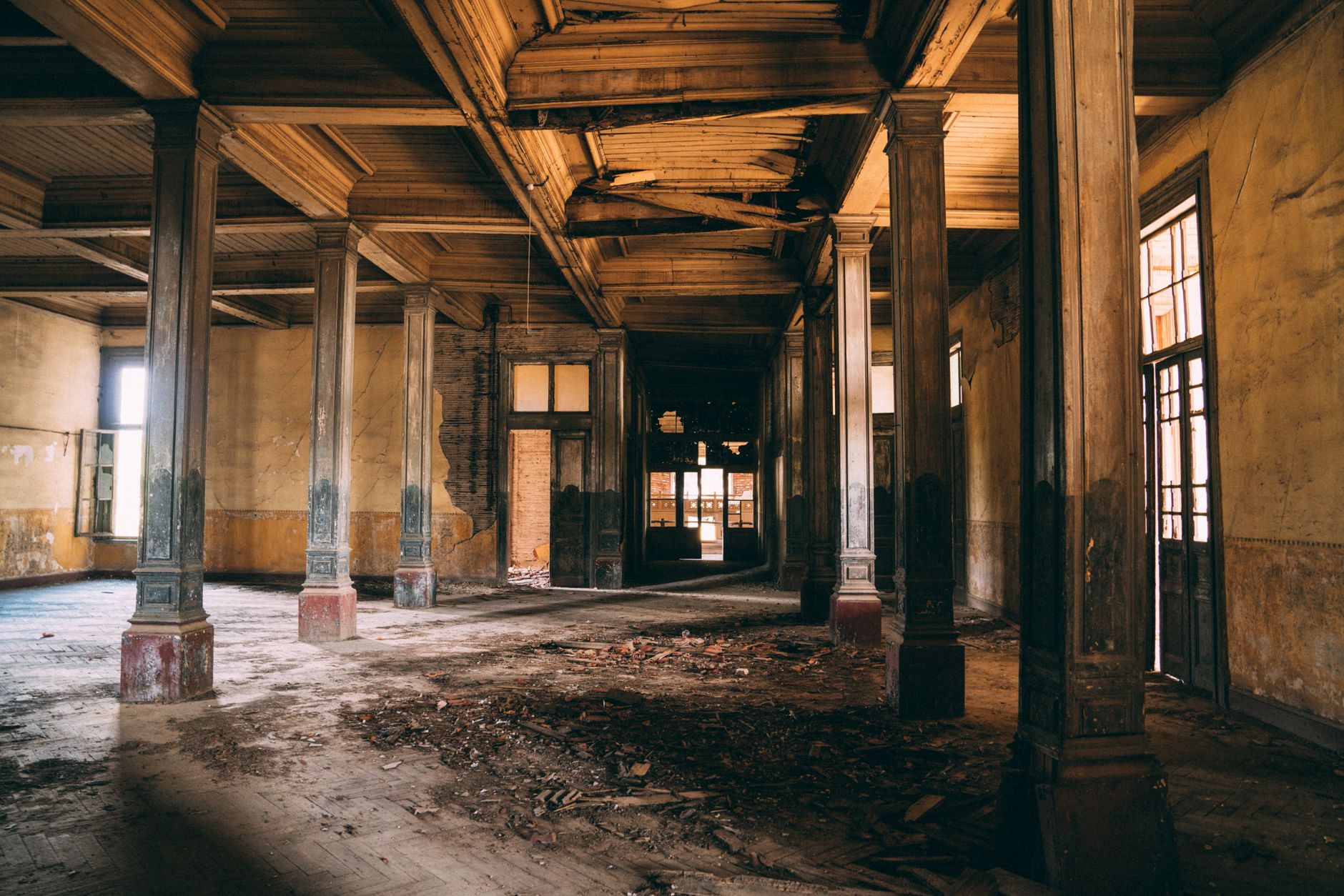
Medak and cinematographer John Coquillon frame the house as a place of excessive empty space. Doorways loom. Ceilings disappear into shadow. The camera holds wide on rooms that could fit three families, with John a small figure in the corner. It's the same strategy Robert Wise used in The Haunting (1963): make the architecture itself feel wrong, let the building do half the acting.
The conspiracy thread
What separates The Changeling from most of its peers is the second half, where the investigation leads outward from the house into the wider world. John uncovers the identity of the dead child and traces a line of corruption that runs through a sitting US senator, played by Melvyn Douglas with cold, almost courtly menace. Douglas was 79 during production and brings a particular kind of weight: the authority of a man who has spent decades not being questioned.
This political dimension gives the ghost something specific to want. The child isn't just haunting a house because it's sad or angry in the abstract. It wants a particular wrong named and exposed. That specificity makes the haunting feel purposeful rather than atmospheric. The film has a moral architecture that most supernatural horror doesn't bother with.
Trish Van Devere, Scott's real-life wife, plays Claire Norman, the historical society representative who becomes John's primary ally. Their relationship stays professional throughout, which is the right call. A romantic subplot would have diluted the grief that powers the whole story.
Why it still holds up
The Changeling was released the same year as The Shining (1980), and the two films make an interesting pair: both use enormous interior spaces to trap a grieving man, both frame supernatural events through a protagonist whose reliability you're asked to partially question. But where Kubrick turned the haunting inward and abstract, Medak keeps his pointing outward toward a concrete, answerable injustice. The Changeling wants its ghost to rest. The Shining wants its horror to keep spiraling. Both approaches work.
What the film gets right that many later haunted-house movies get wrong: it earns every scare through patient build. The house doesn't try to kill John. It tries to communicate with him. The distinction matters enormously. Communication implies the ghost has interiority, history, and something at stake beyond simple malevolence. That's far more unsettling than a monster that just wants you dead.
For viewers who came to ghost stories through films like The Others (2001) or the slow-burn psychological horror of the last two decades, The Changeling will feel familiar in the best possible way: a direct ancestor you can trace the DNA back to. The ball on the staircase. The sealed room. The séance in the dark. These aren't tropes the film borrowed. In many cases, The Changeling is where they started.
Verdict
The Changeling (1980) is a masterclass in atmospheric restraint. Peter Medak builds dread through architecture, performance, and a ghost story that has the decency to mean something. George C. Scott gives one of the most underrated horror performances on record. Forty-six years on, the film has lost none of its power. It's essential viewing for anyone serious about the haunted-house genre, and it's better than most of what came after it.
Rating: 9/10